
Dementia Treatment in Thane

Dementia is not just “old age forgetfulness.” It is a condition that can affect memory, judgment, language, behavior, and the ability to manage everyday life. In many patients, symptoms begin gradually. Families may first notice repeated questions, confusion, misplacing things, missed medicines, poor judgment, or changes in personality.
When these changes start affecting safety, independence, or daily routine, a careful neurological evaluation becomes important. The first step is not to assume the cause. Different conditions can lead to memory problems, and some are treatable or partly reversible when identified early.
Dr. Siddharth Kharkar is an internationally trained neurologist providing dementia treatment in Thane with a clear, structured, and compassionate approach. He focuses on accurate diagnosis first, then designs a treatment plan based on the cause, stage of illness, day-to-day symptoms, and the needs of both the patient and family.
Clear diagnosis. Precise treatment. Compassionate care.
Are you unsure whether memory loss, confusion, or behavior change could be a sign of dementia? Let us understand what dementia is, how it presents, and how treatment decisions are made.
What is Dementia?
Dementia is a broad medical term used for a decline in memory and thinking that begins to interfere with daily life. A person may struggle with remembering recent events, following conversations, handling money, taking medicines correctly, finding words, recognizing places, or making safe decisions.
Dementia is not a single disease. It is a syndrome caused by different brain conditions. Alzheimer’s disease is one common cause, but vascular changes, Lewy body disease, frontotemporal degeneration, vitamin deficiencies, thyroid problems, sleep disorders, medication effects, and other neurological conditions may also play a role. That is why the right diagnosis matters before treatment begins.
Types of Dementia
Alzheimer's Disease: This is the most common type of dementia. It usually causes gradually worsening short-term memory problems, disorientation, and difficulty managing familiar daily tasks.
Vascular Dementia: This type is linked to reduced blood flow to the brain, often due to strokes or small vessel disease. Patients may show slowed thinking, poor planning, imbalance, or stepwise worsening.
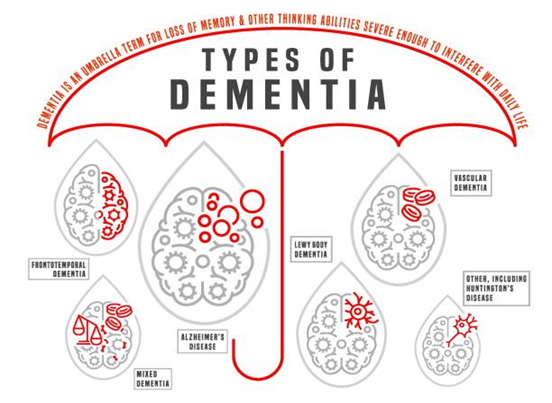
Lewy Body Dementia: This can cause memory changes along with visual hallucinations, stiffness, slowness, fluctuations in alertness, and sleep-related symptoms.
Frontotemporal Dementia: This form often affects behavior, judgment, personality, or language earlier than memory. Families may first notice unusual behavior, emotional change, or socially inappropriate actions.
Not all memory problems are dementia: Depression, B12 deficiency, thyroid disease, medication side effects, sleep apnea, infections, hydrocephalus, and other medical conditions can also cause memory complaints. Some of these can improve with proper treatment.
Concerned about memory loss or confusion in yourself or a loved one? A specialist evaluation can help identify the cause and guide the right next steps.
What are the Signs of Dementia?
The symptoms can vary from one person to another. In the early stages, families may notice subtle changes rather than dramatic ones. Some common warning signs include:
Repeating the same questions or stories
Forgetting recent events, appointments, or conversations
Misplacing important items and being unable to retrace steps
Difficulty handling money, medicines, or household tasks
Confusion about time, place, or familiar routes
Changes in judgment, behavior, mood, or social awareness
Trouble finding words or following conversations
Reduced initiative, withdrawal, or loss of interest in usual activities

Why Accurate Diagnosis Matters in Dementia Treatment
The most important question is not simply, “Is this dementia?” The real question is, “What is causing these symptoms?”
Different causes of memory decline need different treatment plans. Some patients may have Alzheimer’s disease. Others may have vascular dementia, Lewy body dementia, mixed dementia, medication-related cognitive decline, or another neurological or medical condition. In some cases, memory loss is only one part of the picture, and problems such as gait imbalance, sleep changes, hallucinations, stroke history, depression, tremor, or seizures may help point to the real diagnosis.
Dr. Siddharth Kharkar’s approach is to evaluate the full clinical picture carefully. This may include a detailed history, examination, review of old reports, and investigations such as MRI brain imaging, blood tests, and cognitive assessment where needed. The aim is to avoid guesswork and make treatment decisions on a solid foundation.
If symptoms are getting worse, affecting safety, or causing distress at home, it is better not to wait.
Treatment Options Available for You
1. Medications
In selected patients, medicines may help improve symptoms, support memory and day-to-day function, reduce behavioral symptoms, or slow progression in some types of dementia. The right medicine depends on the underlying diagnosis, age, other medical problems, and tolerance.
2. Cognitive and Supportive Therapy
Cognitive stimulation, structured routines, occupational therapy, speech therapy, and supportive counseling may help patients function better and maintain independence for longer. These measures are often very useful when combined with medical treatment.

3. Lifestyle and Daily Care Measures
Sleep, hydration, nutrition, blood pressure control, physical activity, hearing and vision correction, social engagement, and mental stimulation all matter. In many patients, simple daily changes can reduce confusion and improve routine functioning.
4. Monitoring and Long-Term Symptom Management
Dementia care usually requires follow-up. Over time, memory, behavior, mobility, sleep, and safety needs may change. Regular review helps adjust medicines, monitor side effects, and plan the next stage of care sensibly.
5. Management of Associated Neurological Problems
Some patients also have tremor, Parkinsonism, stroke-related issues, imbalance, sleep disturbance, hallucinations, or seizures. These associated neurological features must be identified and treated properly because they can strongly affect quality of life.
6. Advanced Care Planning and Family Guidance
As the condition progresses, it becomes important to discuss supervision, medication management, home safety, fall prevention, wandering risk, driving, nutrition, and caregiver stress. Good dementia treatment supports the family as well as the patient.
Each treatment plan is personalized. The goal is not to use the most aggressive treatment. The goal is to use the right treatment for the right patient at the right stage.
Our Approach and Procedure
At NeuroPlus Epilepsy & Parkinson’s Clinic, we follow a comprehensive and patient-centered approach to dementia treatment in Thane:
1. Initial Consultation and Clinical Evaluation
The first consultation focuses on understanding what has changed, when it started, how quickly it is progressing, and how it is affecting daily life. Family observations are often very helpful in this stage.

2. Root-Cause Investigation
Where needed, Dr. Kharkar may advise investigations such as MRI brain imaging, blood tests, and structured cognitive assessment. If symptoms suggest another neurological condition, that is evaluated carefully as well.
3. Personalized Treatment Planning
Once the diagnosis is clearer, treatment is planned according to the likely cause, stage of symptoms, medical background, and daily needs of the patient. Medicines, routines, therapies, and caregiver advice are chosen selectively and thoughtfully.
4. Clear Communication With Family
Dementia creates fear mainly when families do not know what is happening or what to expect. Dr. Kharkar explains the diagnosis, likely progression, treatment goals, and practical next steps in simple language.
5. Follow-Up and Long-Term Support
Dementia care does not end after one consultation. Follow-up helps assess response, review new symptoms, reduce medication burden where possible, and support families through changing care needs over time.
Support for Families and Caregivers
Many people searching for dementia treatment in Thane are family members trying to understand what to do next. That is completely normal.
Caring for someone with dementia can be physically and emotionally demanding. Families often struggle with repeated questions, agitation, sleep disturbance, refusal of medicines, wandering, eating changes, and loss of independence. A good treatment plan should make daily life more manageable, not more confusing.
Dr. Kharkar’s approach includes helping families understand the condition clearly, recognize what symptoms need attention, and plan care in a realistic way. This includes guidance on home safety, medications, routines, communication, and knowing when a change in behavior may signal a medical problem rather than “just dementia.”
Cost of Dementia Treatment
The cost of dementia treatment can vary depending on the complexity of the symptoms, the tests required, the type of dementia suspected, the medicines prescribed, and the need for rehabilitation or repeated follow-up.
In many cases, the total cost may include consultation charges, investigations such as MRI or blood tests, medicines, therapy referrals, and follow-up visits. Because dementia care is highly individualized, the most accurate estimate is usually possible after a proper clinical evaluation.
At NeuroPlus Clinic, the focus is on recommending what is medically appropriate and genuinely useful. Unnecessary investigations or aggressive treatment approaches are not the goal.
Why Choose Dr. Siddharth Kharkar for Dementia Treatment in Thane
Internationally trained neurologist:
Dr. Kharkar has trained in leading institutions in India, the USA, and the UK, bringing global neurological expertise to patients in Thane.
Accurate diagnosis first:
He focuses on identifying the real cause of memory decline before starting treatment.
Clear explanations in simple language:
Patients and families should understand the condition, the plan, and the reason behind each decision.
Personalized treatment, not one-size-fits-all care:
Every dementia case is different. Treatment is adjusted to the diagnosis, symptoms, age, co-existing conditions, and goals of care.

Experience with complex neurological conditions:
This matters when dementia overlaps with Parkinsonism, stroke, tremor, seizures, gait imbalance, or other neurological symptoms.
Advanced treatment only when truly needed:
The emphasis is on thoughtful, evidence-based care. Not every patient needs aggressive treatment, and not every memory complaint is dementia.
Long-term support for patients and families:
The aim is to improve day-to-day functioning, maintain dignity, reduce confusion, and help families feel more confident about care.
Need a careful evaluation for memory loss, confusion, or dementia symptoms? Speak with Dr. Siddharth Kharkar for a structured neurological assessment.
Frequently Asked Questions
1. What are the early signs of dementia?
Early signs can include repeated questions, forgetfulness about recent events, confusion, poor judgment, getting lost in familiar places, difficulty handling medicines or finances, and changes in behavior or mood. Symptoms are often gradual at first.
2. Can dementia be cured or reversed?
Some causes of memory problems are treatable, and that is one reason early evaluation is important. However, many true degenerative dementias are not fully reversible. Even then, treatment can still help with symptoms, safety, routine functioning, and quality of life.
3. When should I see a doctor for dementia symptoms?
You should seek evaluation if memory changes are increasing, affecting work or home life, creating safety concerns, causing medication mistakes, leading to confusion in familiar places, or being noticed clearly by family members.
4. What is the best treatment for dementia?
There is no single best treatment for every patient. The right plan depends on the cause, stage, symptoms, associated medical conditions, and the patient’s daily needs. Treatment may include medicines, lifestyle measures, therapy, and caregiver guidance.
5. Is long-term treatment required for dementia?
In many cases, yes. Dementia care often involves ongoing review because symptoms and needs can change over time. Follow-up helps adjust treatment, monitor new problems, and support the family through different stages of care.
Disclaimer:
This content is for educational purposes only and is not a substitute for professional medical advice, diagnosis, or treatment.