
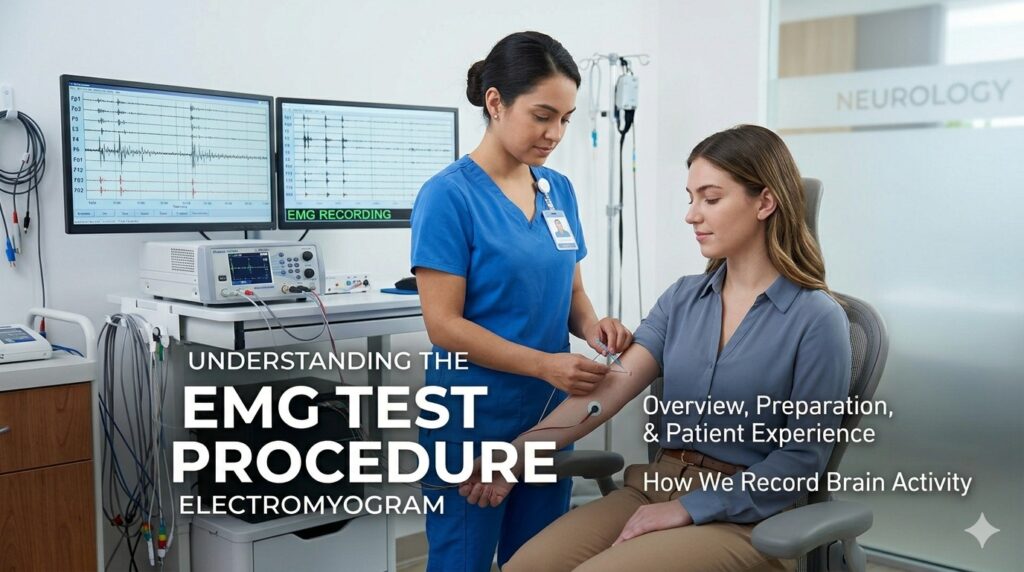

EMG Test in Thane for Nerve and Muscle Evaluation
Specialist-led nerve and muscle evaluation in Thane and Mumbai.
What Is an EMG?
During the EMG part of the study, a very fine recording electrode is placed into selected muscles to measure activity at rest and during gentle movement. The test helps show whether symptoms may be pointing toward a nerve problem, a muscle problem, or both.
EMG is often performed along with a nerve conduction study because the two tests answer related but different questions.
This type of testing is especially useful when a neurologist needs more information about:
- weakness
- numbness
- tingling
- burning nerve pain
- muscle cramps or twitching
- suspected neuropathy, pinched nerve, or muscle disease


Why an EMG Test in Thane May Be Recommended
An EMG is not a routine test for everyone. It is usually advised when your symptoms, medical history, or neurological examination suggest that studying nerve and muscle function could help clarify the diagnosis.
Dr. Siddharth Kharkar may recommend an EMG if you have:
- persistent weakness
- numbness or reduced sensation
- tingling or pins and needles
- burning or radiating pain
- muscle cramps, twitching, or spasms
- suspected nerve compression
- difficulty with grip, walking, or day-to-day tasks
- possible neuropathy or muscle disease
Sometimes the main question is whether the problem is coming from a pinched nerve, a generalized neuropathy, a nerve injury, or a primary muscle disorder. EMG can help narrow that question.
Symptoms and Conditions Evaluated
EMG can help support the evaluation of:
- peripheral neuropathy
- carpal tunnel syndrome and other entrapment neuropathies
- radiculopathy or pinched nerve from the neck or back
- nerve injuries
- muscle disorders or myopathy
- selected neuromuscular junction disorders
- motor neuron disorders in the right clinical setting
It also helps answer practical questions such as: Is the weakness more likely nerve-related or muscle-related? Do the findings fit nerve damage, nerve compression, or a broader neuropathy pattern?
Just as important, EMG is only one part of diagnosis. It does not replace symptom history, neurological examination, imaging, or other investigations when needed.


What Happens During an EMG Test
EMG testing is usually straightforward and well tolerated.
Here is what patients can expect:
- 1. You arrive and the test is explained. You will be guided through the procedure and given a chance to ask questions.
- 2. The nerve conduction part may be done first. Small electrodes are placed on the skin, and brief stimulation is used to see how signals travel through a nerve.
- 3. Selected muscles are then examined with a very fine recording electrode. This is the EMG part of the study.
- 4. You may be asked to relax and then gently move certain muscles so the activity can be recorded properly.
- 5. The doctor studies the pattern of electrical activity and matches it to the symptoms being investigated.
- 6. At the end, the testing is completed and you can usually leave right away. Mild temporary soreness in tested muscles can happen afterward.
The total visit length depends on how many nerves and muscles need to be assessed.
Is EMG Painful or Unsafe?
This is one of the most common concerns, and it is a fair question.
Parts of the study can be uncomfortable, but most patients tolerate the test well. The nerve conduction part involves brief electrical pulses. The needle EMG part may cause short, sharp discomfort when the recording electrode is placed into a muscle.
Some people notice mild soreness or tenderness afterward, but it is usually temporary.
EMG is generally considered a safe test. It is important to tell the doctor beforehand if you take blood thinners, have a pacemaker or implanted device, have a bleeding disorder, or have a skin infection in the area being tested.
A useful reassurance point: the needle EMG itself does not give electrical shocks.
How to Prepare for EMG
- Preparation is usually simple.
- Before the test:
- Do not apply lotion, cream, oil, or moisturiser to the skin on the day of the test.
- Wear loose, comfortable clothing so the arms and legs can be examined easily.
- Eat normally unless you are given different instructions.
- Take your regular medicines unless your neurologist specifically tells you not to.
- Tell the doctor if you take blood thinners or have a pacemaker, implanted device, or bleeding issue.
- Bring previous reports, scan results, or related test records if available.
If any special preparation is needed for your case, you should be told clearly in advance.
EMG vs NCV
Many patients hear these terms together and assume they mean the same thing. They do not.
NCV, also called NCS or nerve conduction study, checks how well electrical signals travel through nerves using electrodes placed on the skin and brief stimulation.
EMG checks electrical activity inside selected muscles using a fine recording electrode.
They are often done together because symptoms like weakness, tingling, numbness, and pain can come from different sources. Doing both can help the neurologist understand whether the issue looks more like a nerve problem, a muscle problem, or a pattern involving both.
Understanding the Results
- This is often the part patients worry about most.
- An EMG study may show findings that fit:
- normal muscle and nerve function
- peripheral neuropathy
- nerve compression or entrapment
- radiculopathy from the spine
- muscle disease
- other patterns that guide next steps
- But the results still need careful interpretation.
An EMG is most useful when it is read alongside your symptoms, examination findings, medical history, imaging, and progress over time.
In other words, the test provides valuable clues, but specialist interpretation turns those clues into a meaningful plan.
Dr. Siddharth Kharkar’s Diagnostic Approach
Dr. Siddharth Kharkar’s approach is simple: listen carefully, examine properly, diagnose accurately, explain clearly, and then decide the right next step.
For patients with weakness, numbness, tingling, nerve pain, or muscle symptoms, EMG is used as part of a careful specialist evaluation, not as a stand-alone label.
This matters because two patients may describe similar symptoms but have very different diagnoses.
EMG findings only become clinically useful when they are interpreted in the context of the patient’s story.
For patients in Thane, Mumbai, and nearby areas, this specialist-led approach helps reduce confusion and avoid rushed conclusions.
- Is this more likely nerve-related or muscle-related?
- Does the pattern fit neuropathy, nerve compression, radiculopathy, or something else?
- How severe does the problem appear?
- Is more testing or follow-up needed?
- What treatment plan makes sense based on the full picture?

Not every tingling symptom means neuropathy.
Not every weakness problem starts in the muscle.
Frequently Asked Questions
What is the full form of EMG?
Why is EMG done?
Is an EMG test painful?
How long does an EMG take?
What is the difference between EMG and NCV?
Do I need to stop my medicines before EMG?
Can I eat before the test?
Is EMG safe?
Can EMG be normal even if my symptoms are real?
Yes. Symptoms can still be real even when the test does not show a major abnormality. That is why the results must be interpreted with your full clinical picture.
When should I see a neurologist about EMG?