
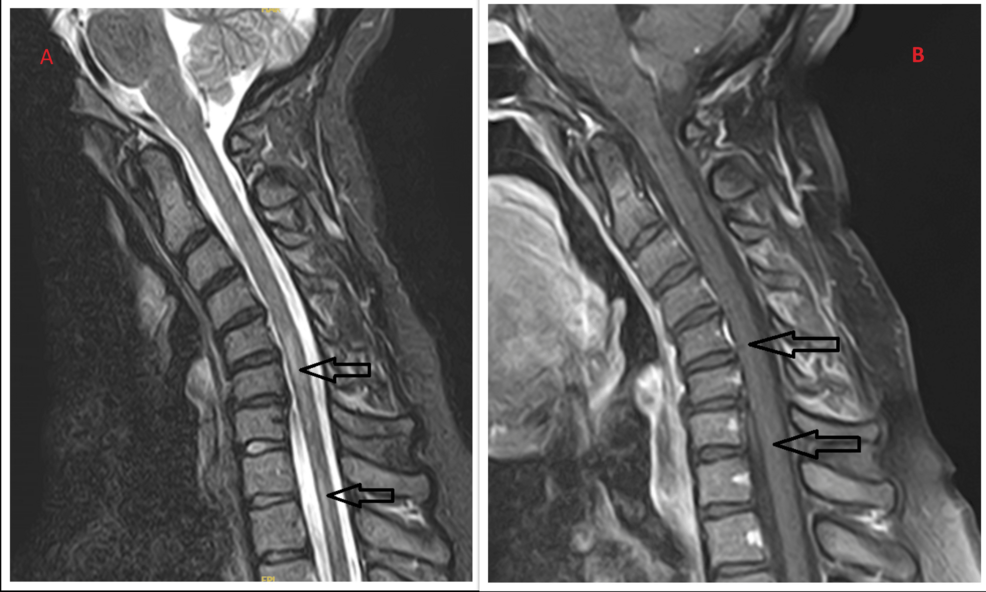
Transverse myelitis symptoms can feel frightening because they may appear suddenly and affect walking, strength, sensation, bladder control, or bowel control. Some people first notice back pain, tingling, numbness, or heaviness in the legs. Others may develop weakness quickly.
Transverse myelitis is not a symptom to ignore. It involves inflammation in the spinal cord, and early neurological evaluation can make a major difference in diagnosis, treatment planning, and recovery.
If symptoms are sudden, worsening, or affecting movement, bladder control, bowel control, or breathing, seek urgent medical help.
Medically Guided by Dr. Siddharth Kharkar
Trusted neurological guidance that turns complex symptoms into clear next steps. Focused on helping patients and families recognize transverse myelitis warning signs early so they can seek the right care without delay.
What Are Transverse Myelitis Symptoms?
Transverse myelitis symptoms may include back or neck pain, numbness, tingling, burning sensations, weakness in the arms or legs, difficulty walking, loss of balance, bladder problems, bowel problems, or a tight band-like feeling around the chest, abdomen, or legs.
You should seek urgent medical care if weakness appears suddenly, numbness spreads quickly, walking becomes difficult, bladder or bowel control changes, or symptoms rapidly worsen.
At a Glance: Symptoms and Warning Signs
Symptom Area | What It May Feel Like | When to Act |
Pain | Back pain, neck pain, or shooting pain into the arms, legs, chest, or abdomen | Seek medical review, especially if pain comes with weakness or numbness |
Sensation changes | Numbness, tingling, burning, coldness, or pins and needles | Seek help if it spreads, worsens, or affects both sides of the body |
Weakness | Heavy legs, weak arms, dragging one foot, trouble standing | Seek urgent care if weakness is sudden or worsening |
Walking difficulty | Stumbling, loss of balance, falls, or trouble climbing stairs | Do not delay neurological evaluation |
Bladder or bowel changes | Urine leakage, difficulty passing urine, constipation, or loss of control | Seek urgent medical care |
Breathing difficulty | Shortness of breath with weakness or spinal symptoms | Go to emergency care immediately |
What Is Transverse Myelitis?
Transverse myelitis is inflammation of the spinal cord. The spinal cord carries messages between the brain and the rest of the body. When inflammation affects this pathway, signals may slow down, become blocked, or become confused.
This can lead to pain, weakness, numbness, walking problems, and bladder or bowel changes.
The word “myelitis” means inflammation of the spinal cord. “Transverse” refers to the way symptoms may affect sensation and movement across a level of the body, often below the part of the spinal cord that is inflamed.
For some people, transverse myelitis happens once. For others, it may be linked to another neurological or immune-related condition, such as multiple sclerosis, neuromyelitis optica spectrum disorder, or MOG antibody disease.
Common Transverse Myelitis Symptoms
Transverse myelitis symptoms can develop over hours, days, or sometimes a few weeks. The exact symptoms depend on which part of the spinal cord is affected.
Back Pain, Neck Pain, or Shooting Pain
Pain may be one of the first symptoms. It can begin in the back or neck and may shoot into the arms, legs, chest, or abdomen.
Some patients describe the pain as sharp. Others feel a deep ache, burning pain, or an electric shock-like sensation.
Pain alone does not always mean transverse myelitis. But pain with weakness, numbness, bladder symptoms, or walking difficulty needs prompt medical attention.
Numbness, Tingling, Burning, or Cold Sensations
Many people notice changes in sensation. These may include:
- Numbness
- Tingling
- Burning
- Pins and needles
- Cold sensations
- Reduced ability to feel heat, cold, or touch
- Pain from light touch
These symptoms may start in the feet, legs, hands, arms, chest, or abdomen. Sometimes, the symptoms appear on both sides of the body. In some cases, one side may feel more affected.
Vision symptoms are not typical of transverse myelitis itself, but certain related conditions can also affect the optic nerve and cause vision problems.
Weakness in the Arms or Legs
Weakness can be mild at first. A person may feel that the legs are heavy, stairs are harder to climb, or one foot is dragging.
In more serious cases, weakness can worsen quickly and may affect standing, walking, hand use, or movement of the arms or legs.
Sudden weakness should always be treated as urgent. It may be due to transverse myelitis or another serious neurological condition.
Difficulty Walking or Loss of Balance

Because the spinal cord helps control movement and sensation, transverse myelitis can affect walking.
A person may notice:
- Stumbling
- Poor balance
- Dragging the feet
- Difficulty standing from a chair
- Trouble walking in a straight line
- Falls or near-falls
This is especially important if walking difficulty appears along with numbness, back pain, or bladder changes.
Bladder and Bowel Problems
Bladder and bowel symptoms are important warning signs. These may include:
- Difficulty passing urine
- Urine leakage
- Sudden urgency to urinate
- Inability to empty the bladder fully
- Constipation
- Loss of bowel control
These symptoms can be embarrassing, so patients may delay mentioning them. Please do not hide them from your doctor. They are medically important and can help identify spinal cord involvement.
Band-Like Tightness Around the Body
Some people feel as if a tight belt or band is wrapped around the chest, abdomen, waist, or legs. This can happen because the inflamed spinal cord changes how the body senses touch and pressure.
This symptom can be confusing because it may feel like a chest, stomach, or muscle problem. When it appears with numbness, weakness, or walking difficulty, a neurological evaluation is important.
When Should You Seek Help for Transverse Myelitis Symptoms?
You should seek help quickly if symptoms suggest spinal cord involvement. Waiting to “see if it goes away” can be risky, especially when weakness, bladder changes, or walking difficulty are present.
Seek Emergency Care Immediately If Symptoms Are Sudden or Worsening
Go to emergency care immediately if you notice:
- Sudden weakness in the legs or arms
- Rapidly worsening numbness or tingling
- Difficulty walking
- Loss of bladder or bowel control
- Severe back pain with neurological symptoms
- Sudden inability to move the arms or legs
- Numbness around the groin or genital area
- Breathing difficulty
- Rapid progression toward paralysis
These symptoms may be caused by transverse myelitis, spinal cord compression, spinal cord stroke, infection, or another serious condition. The exact cause must be checked urgently.
See a Neurologist Promptly If Symptoms Are Mild but Unusual
Not every case begins dramatically. Some people first notice mild numbness, tingling, pain, stiffness, or imbalance.
You should schedule a neurological evaluation if symptoms:
- Are new and unexplained
- Last more than a short time
- Keep spreading
- Affect both legs or both sides of the body
- Come with bladder or bowel changes
- Follow a recent infection
- Occur with known autoimmune disease
- Are linked with other possible neurological symptoms
Early review helps your doctor decide whether testing is needed and whether treatment should begin quickly.
What Causes Transverse Myelitis?
Transverse myelitis can happen for different reasons. In some patients, no clear cause is found. In others, it may be related to infection, immune system activity, or another neurological condition.
Infection-Related Inflammation
Transverse myelitis may occur after certain viral, bacterial, or other infections. Sometimes, the immune system reacts strongly after an infection and mistakenly attacks the spinal cord.
The infection may already be improving by the time neurological symptoms start, which can make the connection hard to recognize without a careful medical history.
Autoimmune and Demyelinating Conditions
Autoimmune conditions happen when the immune system attacks the body’s own tissues. In some cases, inflammation can affect the spinal cord.
Transverse myelitis may be linked with conditions such as lupus, Sjogren’s syndrome, sarcoidosis, or other immune-related disorders.
It may also be linked to demyelinating conditions. “Demyelinating” means the protective covering around nerve fibers is affected, which can disturb nerve signals.
Multiple Sclerosis, NMOSD, and MOGAD
Transverse myelitis can sometimes be the first sign of multiple sclerosis, neuromyelitis optica spectrum disorder, or MOG antibody disease.
This is why doctors may order MRI scans, blood tests, antibody testing, and sometimes a lumbar puncture. These tests help identify whether the episode is isolated or part of a broader neurological condition.
Some patients with spinal cord inflammation may also need evaluation for the early signs of multiple sclerosis if the pattern of symptoms or MRI findings suggests it.
How Doctors Diagnose Transverse Myelitis
Diagnosis is not based on symptoms alone. A neurologist looks at the pattern of symptoms, examination findings, scan results, and lab tests.
The goal is to confirm spinal cord inflammation and rule out other urgent causes.
Neurological Examination
A neurological examination may check:
- Muscle strength
- Reflexes
- Sensation
- Balance
- Walking
- Coordination
- Bladder or bowel symptoms
- Pain pattern
- Level of sensory change on the body
This exam helps identify where the nervous system may be affected.
MRI of the Spine and Brain
MRI is one of the most important tests when transverse myelitis is suspected.
An MRI of the spine can show inflammation, swelling, or other changes in the spinal cord. An MRI of the brain may also be done to look for signs of multiple sclerosis or related conditions.
MRI also helps rule out other problems, such as spinal cord compression, tumors, abscess, disc-related pressure, or stroke-like injury to the spinal cord.
Blood Tests, Antibody Tests, and Lumbar Puncture
Blood tests may look for infection, inflammation, autoimmune markers, and specific antibodies.
A lumbar puncture, also called a spinal tap, may be used to study cerebrospinal fluid. This fluid can show signs of inflammation or infection and may help separate transverse myelitis from other neurological conditions.
Depending on the case, doctors may test for antibodies linked with neuromyelitis optica spectrum disorder or MOG antibody disease.
Treatment Options for Transverse Myelitis
Treatment depends on the severity of symptoms, the cause, and how quickly the condition is progressing.
The main goals are to reduce spinal cord inflammation, treat any underlying cause, manage symptoms, and support recovery.
Reducing Spinal Cord Inflammation
In many cases, treatment begins with high-dose corticosteroids given through a vein. These medicines are used to reduce inflammation in the spinal cord.
If symptoms are severe or do not respond enough, doctors may consider other treatments such as plasma exchange or IVIG, depending on the situation.
Treatment decisions should always be guided by a neurologist because the cause and pattern of transverse myelitis can differ from person to person.
Managing Pain, Weakness, and Bladder or Bowel Symptoms
Treatment may also include medicines and supportive care for:
- Nerve pain
- Muscle stiffness
- Muscle spasms
- Bladder problems
- Bowel problems
- Walking difficulty
- Sleep disturbance
- Emotional stress
Bladder and bowel symptoms need special attention because they can affect comfort, safety, and quality of life.
Rehabilitation and Recovery Support
Rehabilitation is often an important part of recovery. This may include physical therapy, occupational therapy, gait training, strengthening exercises, stretching, and support for daily activities.
Recovery can take weeks, months, or longer. Some patients recover well, while others may have lasting weakness, stiffness, pain, numbness, or bladder symptoms.
When transverse myelitis is linked to MS, long-term care may also include disease-focused planning, including multiple sclerosis treatment when appropriate.
Can Transverse Myelitis Be Confused With Other Conditions?
Yes. Several conditions can look similar in the early stage.
These may include:
- Spinal cord compression
- Slipped disc pressing on the spinal cord
- Spinal cord stroke
- Multiple sclerosis
- Neuromyelitis optica spectrum disorder
- MOG antibody disease
- Peripheral neuropathy
- Guillain-Barre syndrome
- Infection around the spine
- Tumor or abscess
This is one reason urgent evaluation matters. The treatment for these conditions can be very different.
For example, spinal cord compression may require emergency treatment. A spinal cord stroke needs a different approach. Multiple sclerosis and related immune conditions need long-term planning.
Recovery: What Patients and Families Should Know
Recovery from transverse myelitis varies. Some people recover almost fully. Others recover partially. Some may have long-term symptoms.
Recovery depends on many factors, including:
- How severe the attack was
- How quickly symptoms worsened
- Which part of the spinal cord was affected
- How soon treatment started
- Whether another condition caused the inflammation
- How well rehabilitation is followed
Early treatment can improve the chance of a better outcome, but recovery is not always immediate. Patients and families should be prepared for gradual progress.
It is also common to feel anxious after a sudden neurological illness. Clear explanations, regular follow-up, and a practical recovery plan can make the process less frightening.