

Muscle weakness can feel confusing and worrying.
You may find it harder to climb stairs, lift your arms, hold objects, walk steadily, chew food, speak clearly, or keep your eyes open. Sometimes, the problem is in the muscle itself. Sometimes, the muscle is healthy, but the nerve signal is not reaching it properly. In some people, the issue happens at the neuromuscular junction, which is the connection point between the nerve and the muscle.
This is why muscle weakness from nerves, muscles, or neuromuscular junction problems should not be guessed at. The pattern of weakness, the speed of onset, and the symptoms that come with it can give important clues.
If weakness is sudden, one-sided, rapidly worsening, or affecting speech, swallowing, or breathing, it needs urgent medical attention.
Medically Guided by Dr. Siddharth Kharkar
Trusted neurological guidance that turns complex symptoms into clear next steps. This article is focused on helping patients and families understand muscle weakness warning signs early, so they can seek the right care without delay.
Where Can Muscle Weakness Come From?
Muscle weakness can come from several places.
It may come from the nerves that carry signals to the muscles. It may come from the muscles themselves. It may come from the neuromuscular junction, where the nerve passes its message to the muscle. In some cases, weakness may also come from the brain or spinal cord.
The important point is this: weakness is not always a muscle problem.
A neurologist looks at the pattern of weakness, associated symptoms, examination findings, and test results to understand where the problem is starting.
At a Glance: What the Pattern of Weakness May Suggest
Pattern of Weakness | Possible Source | Common Clues | What to Do Next |
Weakness with numbness or tingling | Nerves | Burning, pins and needles, reduced sensation | Neurological evaluation |
Weakness with muscle pain or cramps | Muscles | Soreness, difficulty climbing stairs, trouble lifting arms | Muscle and blood test evaluation |
Weakness that worsens with repeated activity | Neuromuscular junction | Drooping eyelids, double vision, improves with rest | Evaluation for myasthenia gravis |
Sudden one-sided weakness | Brain or spinal cord | Face drooping, speech trouble, imbalance | Emergency care |
Progressive weakness over weeks or months | Nerve, muscle, or neuromuscular disorder | Gradual loss of strength or daily function | Neurologist evaluation |
What Muscle Weakness Really Means
People often use the word “weakness” for many different feelings.
Some people mean tiredness. Some mean body pain. Some mean heaviness in the legs. Some mean they cannot generate normal strength even when they try.
In medicine, true muscle weakness means the muscle is not producing normal power.
For example:
- You cannot rise from a chair without using your hands.
- You struggle to climb stairs.
- You cannot lift your arms to comb your hair.
- Your grip becomes weak.
- Your foot drags while walking.
- Your eyelids droop by evening.
- Your voice becomes weaker after talking for some time.
These details matter because they help separate true weakness from fatigue, pain, stiffness, or general tiredness.
True Weakness vs Fatigue
Fatigue means you feel tired or drained.
True weakness means a body part cannot perform its usual action with normal strength.
For example, feeling tired after a long day is fatigue. But being unable to lift your foot while walking, hold a cup firmly, or raise your arm despite trying may suggest true weakness.
Both symptoms deserve attention, but they point to different possibilities.
Why the Pattern Matters
The pattern of weakness often gives the first clue.
Weakness with numbness may point toward nerve involvement. Weakness with muscle pain may suggest a muscle disorder. Weakness that changes through the day and worsens with repeated use may suggest a neuromuscular junction problem.
That is why a careful history and neurological examination are so important.
When Muscle Weakness Is an Emergency
Some forms of weakness should not wait for a routine appointment.
Seek urgent medical care if weakness is:
- Sudden
- One-sided
- Associated with facial drooping
- Associated with slurred speech
- Associated with sudden imbalance
- Associated with confusion
- Associated with severe headache
- Affecting breathing
- Affecting swallowing
- Rapidly worsening
- Happening after injury
These symptoms can sometimes point to serious conditions such as stroke, TIA, spinal cord problems, or severe neuromuscular weakness.
Sudden One-Sided Weakness
Sudden weakness on one side of the body is a red flag.
If one arm or leg becomes weak suddenly, especially with face drooping, speech difficulty, or imbalance, treat it as an emergency. Stroke care is time-sensitive. Do not wait to see if it improves on its own.
Weakness With Breathing or Swallowing Difficulty
Weakness that affects breathing or swallowing needs urgent attention.
This can happen in some nerve, muscle, or neuromuscular junction disorders. It may become serious quickly if the breathing muscles or throat muscles are involved.
Rapidly Worsening Weakness
Weakness that spreads or worsens over hours or days should be checked quickly.
This is especially important if it starts in the legs and moves upward, affects walking, or comes with numbness, severe back pain, or breathing difficulty.
Nerve vs Muscle vs Neuromuscular Junction: Why the Source Matters
To move a muscle, the body needs a smooth chain of communication.
The brain sends a signal. The signal travels through the spinal cord and nerves. The nerve reaches the muscle and passes the message at the neuromuscular junction. Then the muscle contracts.
If any part of this chain is affected, weakness can happen.
The source matters because the treatment changes completely depending on where the problem is.
A nerve problem is treated differently from a muscle disease. A neuromuscular junction disorder is treated differently from both. A stroke or spinal cord problem needs a different approach again.
How the Nerve-Muscle Signal Works
Think of the nerve as an electrical wire and the muscle as the machine that responds.
The neuromuscular junction is like the switch point where the message passes from the wire to the machine. If the wire is damaged, the message may not reach properly. If the machine is damaged, it may not respond. If the switch point is faulty, the message may become weak or unreliable.
This simple idea helps explain why muscle weakness can have very different causes.
Why the Same Symptom Can Have Different Causes
Two people may both say, “My legs feel weak.”
But one may have a nerve problem. Another may have a muscle disease. A third may have a neuromuscular junction disorder. A fourth may have a brain or spinal cord condition.
That is why guessing from symptoms alone is risky.
A neurological evaluation helps identify the source more safely.
When Weakness Comes From the Nerves
Nerves carry signals from the brain and spinal cord to the muscles.
When nerves are damaged, compressed, inflamed, or not working properly, the muscles may not receive strong signals. This can cause weakness.
Nerve-related muscle weakness may come with:
- Numbness
- Tingling
- Burning pain
- Pins and needles
- Loss of sensation
- Reduced reflexes
- Shooting pain from the neck or back
- Foot drop
- Hand weakness
- Balance problems
Common Clues of Nerve-Related Muscle Weakness
Nerve weakness often affects a specific pattern.
For example, a pinched nerve in the spine may cause pain, tingling, and weakness down one arm or leg. Peripheral neuropathy may affect the feet first. Some nerve disorders may cause weakness with reduced reflexes.
If weakness comes with numbness or tingling, nerves must be considered.
Conditions That May Affect the Nerves
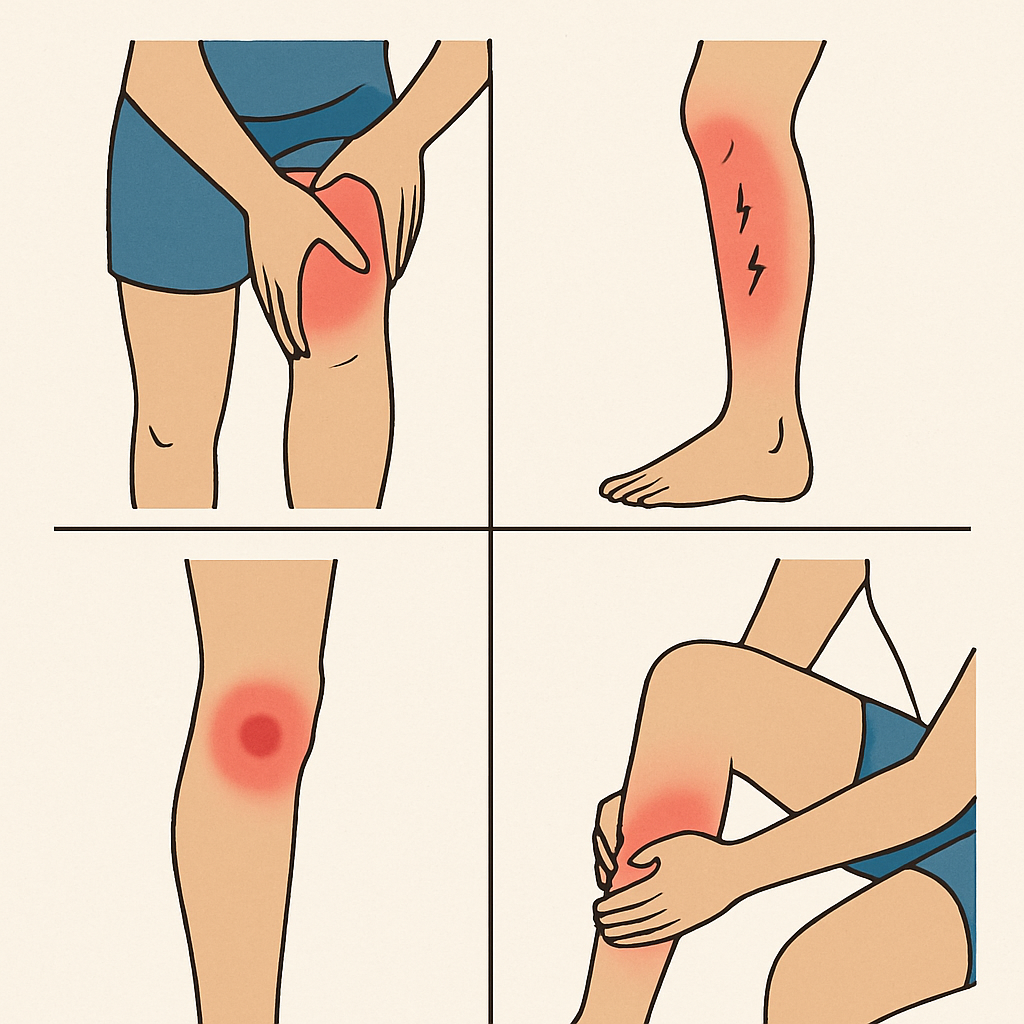
Nerve-related weakness may be seen in conditions such as:
- Peripheral neuropathy
- Radiculopathy, also called a pinched nerve
- Guillain-Barré syndrome
- Motor neuron disease
- Nerve injury
- Certain autoimmune or metabolic conditions
These conditions are very different from each other. Some are urgent. Some are chronic. Some are treatable. The right diagnosis matters.
When Weakness Comes From the Muscles
Sometimes, the nerve signal reaches the muscle, but the muscle itself cannot respond normally.
This is called muscle-related weakness. Doctors may also use the term myopathy for certain muscle diseases.
Muscle-related weakness may affect large muscle groups, especially around the shoulders, hips, thighs, or upper arms.
You may notice difficulty with:
- Climbing stairs
- Getting up from a low chair
- Lifting arms overhead
- Carrying bags
- Walking for longer distances
- Rising from the floor
- Repeated falls
Common Clues of Muscle Disease or Myopathy
Muscle-related weakness may come with muscle pain, cramps, stiffness, or soreness.
In some cases, there may be dark urine, swelling, or tenderness. In others, there may be very little pain, only slow loss of strength.
Doctors may check muscle enzymes, such as creatine kinase, to look for muscle injury or inflammation.
Daily Activities That May Reveal Muscle Weakness
Muscle weakness often shows up during everyday tasks.
A person may say, “I can walk, but stairs are difficult.” Another may say, “I cannot lift my arms to wash my hair.” These are useful clues because they show which muscle groups are involved.
This helps the neurologist decide which tests may be needed.
When Weakness Comes From the Neuromuscular Junction
The neuromuscular junction is the place where the nerve communicates with the muscle.
In neuromuscular junction weakness, the nerve may send the signal, and the muscle may be capable of working, but the message does not pass properly.
This can create a special pattern of weakness.
The weakness may fluctuate. It may worsen with repeated use. It may improve with rest.
Why Weakness May Fluctuate
Fluctuating weakness means the weakness changes during the day or with activity.
For example, a person may feel stronger in the morning but weaker by evening. The eyelids may droop more after reading or screen use. Speech may become unclear after talking for some time. Chewing may become difficult during a meal.
This pattern is important because it may point toward a neuromuscular junction disorder.
Myasthenia Gravis and Neuromuscular Junction Weakness
Myasthenia gravis is one of the best-known conditions affecting the neuromuscular junction.
It can cause weakness in voluntary muscles, including muscles of the eyes, face, throat, neck, arms, legs, and breathing muscles. Common warning signs may include drooping eyelids, double vision, difficulty chewing, difficulty swallowing, nasal speech, neck weakness, and tiredness with repeated activity.
If these symptoms sound familiar, reading more about myasthenia gravis early symptoms can help you understand why this pattern should be checked carefully.
Breathing difficulty, severe swallowing difficulty, or rapidly worsening weakness should be treated as urgent.
Can Muscle Weakness Also Come From the Brain or Spinal Cord?
Yes.
Although this article focuses on nerves, muscles, and the neuromuscular junction, weakness can also come from the brain or spinal cord.
This is important because some brain and spinal cord causes need urgent care.
Stroke, TIA, and Sudden Weakness
Sudden weakness on one side of the body may point to stroke or TIA.
This may happen with facial drooping, slurred speech, confusion, vision changes, sudden imbalance, or severe headache. These symptoms should not be watched at home.
Emergency care is needed.
Spinal Cord Symptoms That Need Attention
Spinal cord-related weakness may come with stiffness, imbalance, numbness below a certain level of the body, bladder or bowel changes, or severe neck or back pain.
If weakness is worsening along with these symptoms, it should be checked urgently.
How a Neurologist Finds Where the Weakness Is Coming From
A neurologist does not rely on one symptom alone.
The diagnosis starts with a careful history and examination.
The doctor may ask:
- When did the weakness start?
- Was it sudden or gradual?
- Is it getting worse?
- Is it one-sided or both-sided?
- Does it change through the day?
- Does it worsen with activity?
- Does it improve with rest?
- Is there numbness or tingling?
- Is there pain?
- Are speech, swallowing, vision, or breathing affected?
- Is walking, climbing stairs, gripping, or lifting affected?
What the Neurological Examination Checks
A neurological examination may check:
- Muscle strength
- Reflexes
- Sensation
- Coordination
- Walking pattern
- Balance
- Eye movements
- Speech
- Swallowing-related symptoms
- Muscle bulk
- Fatigability
These findings help narrow the source of weakness.
For example, reduced sensation may point toward nerve involvement. Proximal weakness may suggest muscle disease. Fluctuating weakness may suggest neuromuscular junction involvement. Increased reflexes may point toward brain or spinal cord involvement.
Why Symptom Pattern Matters
The pattern is often more important than the word “weakness” itself.
Weakness in the hands is different from weakness in the thighs. Sudden weakness is different from slowly progressive weakness. Weakness with numbness is different from weakness with double vision or drooping eyelids.
This is why a structured evaluation is safer than self-diagnosis.
Tests That May Help Diagnose Muscle Weakness

The tests depend on the suspected cause.
Not every patient needs every test. A neurologist selects tests based on symptoms and examination findings.
EMG and Nerve Conduction Study
An EMG test for muscle weakness can help study how muscles and nerves are working.
A nerve conduction study checks how well signals travel through the nerves. These tests can be useful when doctors suspect neuropathy, nerve injury, motor neuron disease, muscle disease, or neuromuscular junction problems.
Blood Tests and Muscle Enzymes
Blood tests may check for:
- Muscle enzymes
- Thyroid problems
- Vitamin deficiencies
- Electrolyte imbalance
- Inflammation
- Autoimmune markers
- Infection-related causes
- Metabolic causes
Creatine kinase is one common muscle enzyme that may rise in some muscle disorders.
Imaging and Antibody Testing
MRI or CT scans may be needed if the doctor suspects brain, spine, or structural nerve compression.
Antibody testing may be done if myasthenia gravis or another autoimmune neuromuscular disorder is suspected.
In selected cases, further tests such as muscle biopsy or genetic testing may be advised.
Treatment Depends on What Is Causing the Weakness
There is no single treatment for all muscle weakness.
The right treatment depends on the source.
Nerve-related weakness may need medicines, control of diabetes or vitamin deficiency, treatment of inflammation, surgery for selected compression cases, or rehabilitation.
Muscle-related weakness may need treatment for inflammation, correction of metabolic problems, medicine changes, physical therapy, or specialist care for specific muscle disorders.
Neuromuscular junction weakness may need medicines that improve nerve-muscle communication, immune treatment in selected cases, monitoring for breathing or swallowing problems, and long-term follow-up.
Patients with confirmed neuromuscular disorders may need a structured plan for diagnosis, treatment, and follow-up. In such cases, timely evaluation for neuromuscular disorders treatment in Thane can help avoid unnecessary delay and confusion.
The goal is not only to improve strength. The goal is to find the cause, protect function, reduce risk, and guide the patient safely.
When Should You See a Neurologist for Muscle Weakness?
You should consider seeing a neurologist if muscle weakness is:
- New
- Unexplained
- Progressive
- Recurrent
- One-sided
- Affecting walking
- Affecting grip
- Affecting climbing stairs
- Associated with numbness or tingling
- Associated with double vision or drooping eyelids
- Associated with difficulty chewing or swallowing
- Associated with breathing difficulty
- Not improving as expected
A neurologist in Thane can help identify whether the weakness is coming from the nerves, muscles, neuromuscular junction, brain, or spinal cord.
Do not delay care if weakness is sudden, severe, or affecting speech, swallowing, or breathing.