

If your feet feel hot, prickly, numb, or strangely sensitive, it is natural to wonder what is going on. For many people, this symptom pattern raises one big question: is this neuropathy?
The honest answer is that it can be. Burning feet, tingling, and numbness are common symptoms of nerve damage, especially peripheral neuropathy. But they can also be linked to diabetes, vitamin deficiencies, thyroid or kidney problems, medication side effects, skin conditions, or nerve compression. The right next step is not guessing. It is understanding the pattern and getting the right evaluation.
Medically guided by Dr. Siddharth Kharkar
Trusted neurological guidance that turns complex symptoms into clear next steps. Focused on helping patients and families understand warning signs early, identify whether symptoms may be coming from the nerves, and seek the right care without delay.
Quick Answer
Yes, burning feet, tingling, and numbness can be signs of neuropathy, especially peripheral neuropathy, which often starts in the feet. This is more likely when symptoms are persistent, affect both feet, worsen at night, feel like pins and needles, or begin to affect balance, sensation, or sleep. Still, neuropathy is not the only cause, so the goal is to confirm the cause rather than assume it.
At a Glance
- Burning, tingling, and numbness in the feet are common neuropathy symptoms.
- Symptoms often start in the toes or soles and may get worse at night.
- Diabetes, vitamin B12 deficiency, thyroid problems, alcohol use, medications, and nerve compression are common causes.
- Diagnosis may involve a neurological exam, blood tests, and sometimes EMG or nerve conduction studies.
- You should not ignore symptoms that are spreading, affecting walking, or linked to weakness or foot wounds.
Why Burning Feet, Tingling and Numbness Can Happen
These symptoms usually mean one of three things is happening: a nerve is irritated, a nerve is damaged, or the body is creating a condition that affects how nerves work. That is why the same symptom can show up in very different situations.
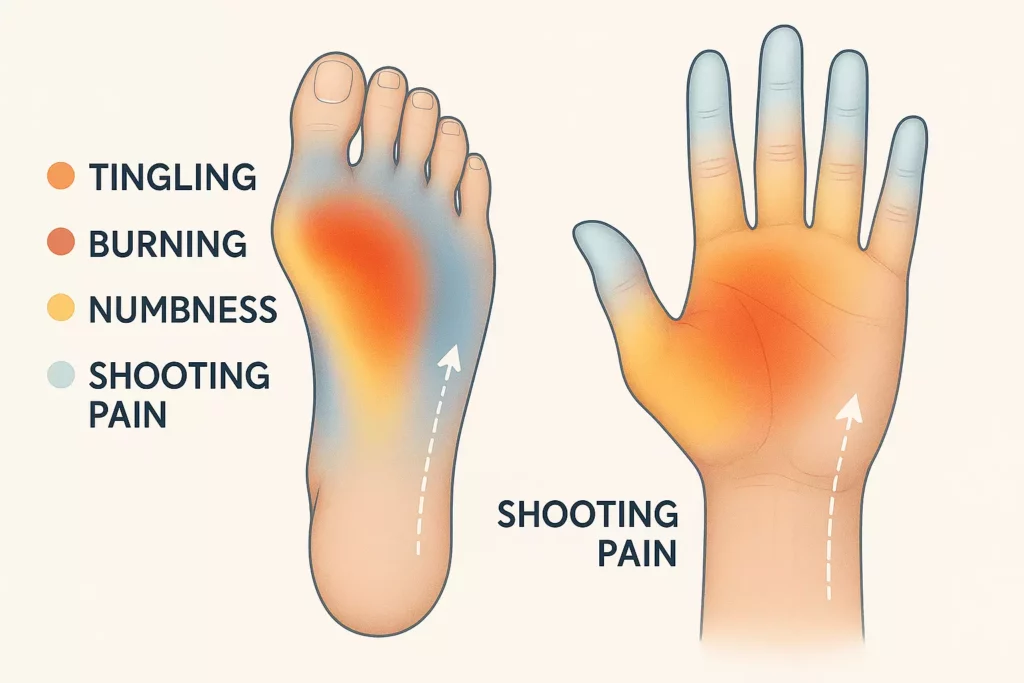
Some people have a mild tingling that comes and goes. Others describe burning pain, sharp stabs, oversensitivity under a bedsheet, or a strange feeling like they are wearing invisible socks. Those details matter. They help separate simple temporary pressure on a nerve from a deeper neuropathy pattern.
When These Symptoms Are More Likely to Be Neuropathy
Pattern of symptoms that points toward nerve damage
Neuropathy becomes more likely when:
- symptoms start gradually,
- both feet are involved,
- the symptoms are burning, tingling, numbness, or pins and needles,
- discomfort gets worse at night,
- balance starts to feel off,
- light touch becomes unpleasant,
- the symptoms begin in the feet and slowly spread upward.
Another clue is function. If you are tripping more often, feeling unsteady, or not noticing small cuts or blisters on your feet, the nerves that carry sensation may not be working normally.
Signs that suggest a non-neuropathy cause

Not every tingling foot problem is neuropathy. Temporary numbness can happen from posture, tight shoes, pressure on a nerve, or a local foot problem. Athlete’s foot, skin irritation, or a compressed nerve such as tarsal tunnel syndrome can also create burning or abnormal sensations in the feet.
That is why the pattern matters more than the symptom alone.
Common Causes of Burning Feet, Tingling and Numbness
Diabetic neuropathy and prediabetes
Diabetes is one of the most common causes of neuropathy in the feet. Over time, high blood sugar can damage nerves and the small blood vessels that nourish them. In many people, burning or tingling in the feet is worse at night and may be one of the earliest clues that blood sugar has been a problem. Prediabetes can do this too.
Vitamin B12 deficiency and other metabolic causes
Low vitamin B12 is an important reversible cause. Thyroid problems, kidney disease, liver disease, alcohol use, and some medications can also affect the nerves. This is one reason a proper workup matters. Sometimes the problem is treatable, but only if it is recognized early.
Small fiber neuropathy
Small fiber neuropathy often causes burning pain, heat sensitivity, stinging, or a “feet on fire” feeling. These small nerve fibers carry pain and temperature signals. In some people, standard electrical nerve tests may look normal even though the symptoms are very real. That is one reason persistent burning feet should not be dismissed just because an earlier test was unrevealing.
Nerve compression, including tarsal tunnel syndrome
Sometimes the problem is more local. A compressed nerve in or near the foot can cause burning, tingling, or numbness in specific areas. Tarsal tunnel syndrome is one example. Footwear, local pressure, injury, or structural strain can also contribute.
Less common but important causes
Less common causes include autoimmune disease, infections, toxin exposure, chemotherapy-related nerve injury, inherited nerve disorders, and certain inflammatory conditions. These are not the first explanation in every patient, but they stay on the list when the pattern or medical history points that way.
How Neurologists Diagnose Neuropathy
Medical history and neurological exam
The first step is listening carefully to the story. A neurologist will want to know where the symptoms started, whether both feet are involved, whether symptoms worsen at night, whether balance is changing, and whether there are triggers like diabetes, alcohol use, medications, or recent illness.
The physical exam may include checking reflexes, vibration sense, pinprick sensation, gait, balance, and the condition of the feet themselves. In people with diabetes, a foot exam is especially important because loss of feeling can hide sores or injuries.
Blood tests that look for reversible causes
Blood work is often used to look for problems such as:
- blood sugar or A1C abnormalities,
- vitamin B12 deficiency,
- thyroid disease,
- kidney or liver problems,
- inflammatory or autoimmune clues.
This part is important because some causes can be improved if treated early.
EMG, nerve conduction studies, and when more testing is needed
EMG and nerve conduction studies help show how nerves and muscles are functioning. They are useful when there is concern for peripheral neuropathy, nerve compression, or more widespread nerve damage. In selected cases, other testing such as skin biopsy may be considered, especially when small fiber neuropathy is suspected.
Treatment for Burning Feet, Tingling and Numbness
Treating the cause
Treatment works best when it targets the reason the nerves are irritated or damaged. That may mean improving blood sugar control, replacing vitamin deficiencies, changing a medication, treating thyroid disease, easing nerve compression, or addressing alcohol-related nerve injury.
Managing nerve pain
When nerve pain is already present, the focus shifts to both comfort and control. Depending on the case, doctors may use medications for nerve pain, topical treatments such as lidocaine, or other symptom-relief strategies. The goal is not only pain relief, but better sleep, safer walking, and a better quality of life.
Protecting balance, skin, and foot health
When numbness is part of the problem, protection becomes just as important as pain relief. Loss of feeling can lead to unnoticed blisters, sores, falls, and balance trouble. Foot care, skin checks, safer footwear, and balance support can make a real difference.
What You Can Do Right Now for Relief
While waiting for an evaluation, a few simple steps may help:
- avoid very hot water on the feet,
- wear comfortable, breathable footwear,
- check your feet daily for cuts, blisters, or redness,
- keep track of when symptoms happen and whether they are worse at night,
- if you have diabetes, take blood sugar control seriously,
- avoid excess alcohol,
- do not ignore new balance changes or spreading numbness.
These steps are helpful, but they are not a replacement for diagnosis when symptoms are persistent.
When to See a Neurologist Urgently
You should seek prompt medical attention if:
- the burning, tingling, or numbness is getting worse,
- symptoms are spreading upward,
- you are losing balance or tripping,
- you develop weakness,
- one foot or leg changes suddenly,
- you have a wound or possible infection, especially if you have diabetes,
- there is sudden severe onset or possible toxin exposure.