
When is NCV/EMG needed for nerve problems? This question often comes up when numbness, tingling, burning pain, or muscle weakness does not go away.
You may feel pins and needles in your hands. Your feet may burn at night. Perhaps your grip is becoming weaker, or pain travels from your neck into your arm.
These symptoms can have several causes. Some involve a trapped nerve. Others involve nerve damage, muscle disease, or problems elsewhere in the nervous system.
An NCV test and an EMG test can help doctors understand how your nerves and muscles are functioning. However, not every person with nerve symptoms needs these tests.
The important question is whether testing will help identify the cause and guide your treatment.
Medically Guided by Dr. Siddharth Kharkar
Trusted neurological guidance that turns complex nerve symptoms into clear next steps.
This article focuses on helping patients and families understand when NCV/EMG testing may be useful, what the results can reveal, and which neurological warning signs need attention without delay.
When Is NCV/EMG Testing Recommended?
Quick Answer: NCV/EMG testing is usually considered when a person has persistent numbness, tingling, unexplained muscle weakness, suspected nerve compression, or signs of peripheral nerve or muscle disease.
An NCV test measures how well electrical signals travel through peripheral nerves. EMG measures electrical activity in muscles.
Together, these tests can help identify whether symptoms are related to nerve injury, a pinched nerve, peripheral neuropathy, or certain muscle disorders.
However, a neurologist decides whether one test, both tests, or another investigation is most appropriate based on your symptoms and examination.
The Mayo Clinic identifies numbness, tingling, muscle weakness, cramping, and certain types of limb pain as symptoms that may lead a doctor to recommend EMG testing.
Mayo Clinic
At a Glance: When Might You Need NCV/EMG?
Symptom or situation | Why testing may help |
Persistent hand numbness | Check for nerve compression, such as carpal tunnel |
Tingling in both feet | Evaluate possible peripheral neuropathy |
Unexplained muscle weakness | Assess nerve and muscle function |
Pain spreading from the neck into an arm | Help evaluate cervical radiculopathy |
Foot weakness or foot drop | Help localize possible nerve injury |
Symptoms after nerve injury | Assess the location and extent of nerve damage |
Sudden one-sided weakness or speech difficulty | Emergency assessment, not routine NCV/EMG |
A brief tingling sensation after sitting awkwardly does not automatically mean nerve damage. But symptoms that continue, spread, worsen, or interfere with daily activities deserve medical evaluation.
What Are NCV and EMG Tests?
NCV and EMG are diagnostic tests that help doctors evaluate the nerves and muscles.
Although they are often performed during the same appointment, they do not measure exactly the same thing.
What Does an NCV Test Measure?
NCV stands for nerve conduction velocity. The procedure is commonly called a nerve conduction study, or NCS.
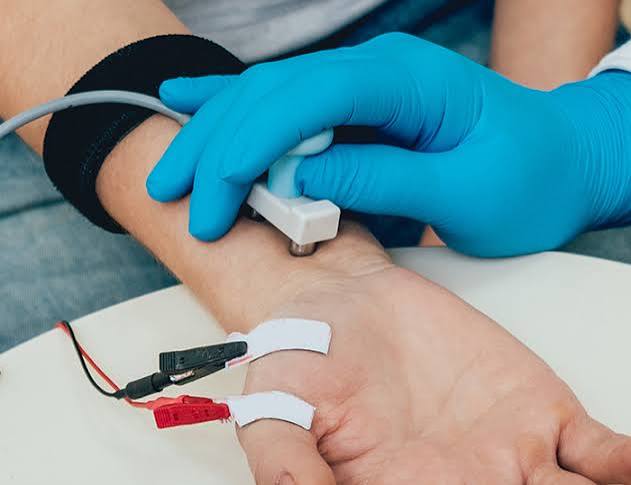
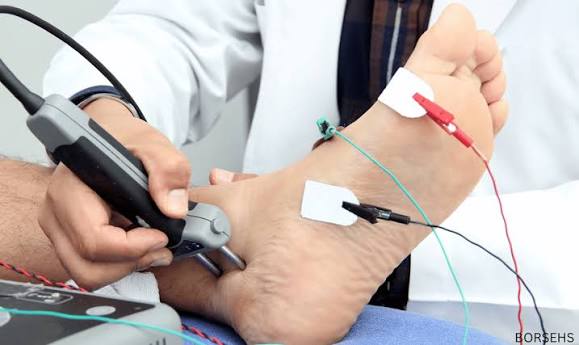
During the test, small electrodes are placed on your skin. Brief electrical pulses stimulate selected nerves, and the equipment records their responses.
The test measures features such as the speed and strength of nerve signals.
For example, if a nerve is compressed at the wrist, electrical signals may travel abnormally through that area. This can help a neurologist evaluate possible carpal tunnel syndrome.
According to Johns Hopkins Medicine, nerve conduction studies help assess nerve damage and can be used alongside EMG to distinguish nerve-related problems from muscle disorders.
Johns Hopkins Medicine
What Does an EMG Test Measure?
EMG stands for electromyography.
During a needle EMG, a doctor inserts a very thin needle electrode into selected muscles. The electrode records electrical activity when the muscle is relaxed and when you move it.
This helps the doctor assess whether the muscle is receiving normal signals from its controlling nerves.
For example, a patient with unexplained leg weakness may have a nerve root problem, a peripheral nerve injury, or a muscle disorder. EMG findings can help distinguish among these possibilities.
Why Are NCV and EMG Sometimes Done Together?
NCV examines electrical signals travelling through peripheral nerves. Needle EMG examines electrical activity within muscles.
NCV / NCS | Needle EMG |
Uses electrodes on the skin | Uses a thin needle electrode |
Measures nerve conduction | Records muscle electrical activity |
Helps evaluate peripheral nerve damage | Helps evaluate muscle and motor nerve problems |
Useful in many nerve compression disorders | Useful in radiculopathy and certain muscle disorders |
Both tests may provide complementary information.
However, not every patient needs both tests. Some conditions can be evaluated with nerve conduction studies alone, while others require additional needle EMG testing.
The testing plan should depend on the clinical question, rather than being identical for every patient.
Which Nerve Symptoms May Require NCV/EMG?
Nerve symptoms are common, but their pattern matters more than any one sensation.
A neurologist considers where symptoms began, how long they have lasted, whether they are worsening, and whether weakness or loss of sensation is present.
Persistent Numbness and Tingling
Numbness means reduced or altered sensation. Tingling may feel like pins and needles, mild electric shocks, or crawling sensations.
You may notice these symptoms in your fingers, hands, toes, or feet.
For example, repeated numbness in the thumb and first few fingers may suggest carpal tunnel syndrome. Tingling in both feet may raise concern about peripheral neuropathy.
If numbness continues, spreads, or affects normal activities, nerve testing may help identify the problem.
However, the location and timing of the symptoms remain important. The test should answer a specific diagnostic question.
Muscle Weakness or Muscle Wasting
Muscle weakness deserves particular attention when it cannot be explained by tiredness or temporary strain.
You may notice that you:
- Drop objects more often.
- Struggle to hold a cup or turn a key.
- Have difficulty lifting the front of your foot.
- Find stairs harder than before.
- Notice a muscle becoming smaller.
These changes may suggest a problem with the muscles or the nerves that control them.
NCV/EMG can help identify certain causes of weakness. However, new or rapidly worsening weakness should be assessed promptly rather than waiting for a routine testing appointment.
Burning Pain, Shooting Pain, or Repeated Nerve Symptoms
Nerve-related pain may feel burning, stabbing, electric, or shooting.
Some patients experience burning in their feet at night. Others have pain travelling from their neck into an arm or from their lower back into a leg.
These symptoms can arise from different nerve conditions.
For a closer explanation of these patterns, see burning feet, tingling, and numbness: is it neuropathy?.
NCV/EMG may be helpful when symptoms suggest a large-fiber nerve disorder, motor nerve involvement, or nerve compression. However, some painful nerve conditions affect small fibers that standard nerve conduction studies do not assess well.
What Nerve Conditions Can NCV/EMG Help Diagnose?
Nerve testing is most useful when it helps the neurologist distinguish between possible causes.
Carpal Tunnel Syndrome and Other Trapped Nerves
Carpal tunnel syndrome occurs when the median nerve is compressed at the wrist.
It commonly causes tingling, numbness, or weakness in the thumb, index finger, middle finger, and part of the ring finger.
Symptoms may be worse at night or during activities that place pressure on the wrist.
A nerve conduction study can help evaluate median nerve function across the wrist. It may also help distinguish carpal tunnel syndrome from other nerve problems when the diagnosis is uncertain.
However, hand numbness does not always begin at the wrist.
It may also come from a nerve root in the neck or from a more widespread nerve condition. The differences are explained in carpal tunnel vs cervical radiculopathy vs neuropathy.
Cervical and Lumbar Radiculopathy
Radiculopathy means irritation or damage affecting a nerve root as it leaves the spine.
Cervical radiculopathy affects nerve roots in the neck. It may cause pain, tingling, numbness, or weakness extending into the shoulder, arm, or hand.
Lumbar radiculopathy affects nerve roots in the lower back. Symptoms may travel into the buttock, leg, or foot.
Needle EMG can sometimes help identify nerve-root-related changes in the muscles supplied by those nerves.
However, a normal EMG does not exclude every case of radiculopathy. MRI and neurological examination may also be needed, depending on the symptoms.
An MRI shows the structures around nerves. EMG provides information about the electrical activity of muscles and their nerve supply.
These are different kinds of information.
Peripheral Neuropathy and Diabetic Nerve Damage
Peripheral neuropathy involves damage or dysfunction affecting nerves outside the brain and spinal cord.
Common symptoms include tingling, numbness, burning pain, reduced sensation, weakness, and balance problems.
Diabetes is an important cause of peripheral neuropathy. Other possible causes include vitamin deficiencies, thyroid problems, kidney disease, certain medicines, and inherited disorders.
Nerve conduction studies may help identify large-fiber neuropathy and assess its pattern.
However, nerve testing is not automatically required for every person with diabetes and tingling feet. A doctor may first consider the history, examination, blood tests, and whether the result would change treatment.
For more guidance, read diabetic neuropathy symptoms and when to see a neurologist.
The NHS explains that evaluation for peripheral neuropathy may include neurological examination, blood tests, and, in selected cases, nerve conduction studies and EMG.
Diagnosis
Muscle and Neuromuscular Disorders
NCV/EMG can also help doctors investigate selected muscle and neuromuscular conditions.
These may include inflammatory muscle disorders, motor neuron disorders, or conditions affecting communication between nerves and muscles.
For example, unusual muscle weakness without clear sensory symptoms may require a different assessment from burning feet or hand tingling.
Some conditions require specialized testing beyond routine NCV and needle EMG.
Therefore, the correct test depends on the suspected disorder.
When Is NCV/EMG Not Needed?
Not every nerve symptom requires an electrical nerve test.
For example, a person may experience temporary tingling after sitting in one position for a long time. If the sensation disappears quickly and does not recur, testing is often unnecessary.
A doctor may also decide against immediate testing when:
- Symptoms are mild, temporary, and clearly related to pressure or position.
- The diagnosis is already well established, and testing would not change treatment.
- Another investigation is more appropriate.
- Symptoms suggest a condition that routine NCV/EMG cannot reliably detect.
- Clinical monitoring or treatment is the better first step.
In some people with typical diabetic neuropathy, the initial evaluation may focus on medical history, examination, and blood tests.
The decision should always reflect the individual case.
The important principle is simple: a medical test is useful when its result can help answer a meaningful clinical question.
How Soon After Nerve Symptoms Should NCV/EMG Be Done?
The timing of NCV/EMG depends on the suspected condition and when symptoms began.
Nerve conduction studies may detect certain abnormalities early. However, changes measured by needle EMG after an acute nerve injury can take time to develop.
For example, signs of muscle denervation following some nerve injuries may not be fully apparent during the first several days.
This means an EMG performed too early may not provide all the information the doctor needs. In selected cases, testing after a few weeks or repeating a study may be appropriate.
However, there is no single waiting period that applies to every nerve problem.
Some conditions need urgent neurological examination or early electrodiagnostic testing. Others can be assessed after an initial period of observation.
Do not delay medical care simply because you believe an EMG test must always be performed several weeks after symptoms begin.
What Happens During an NCV/EMG Test?
NCV/EMG testing is usually performed in an outpatient setting.
You will normally sit or lie down while the examiner assesses the nerves or muscles relevant to your symptoms.
During nerve conduction testing, electrodes are placed on your skin. Short electrical pulses stimulate the nerves and record their responses.
If needle EMG is needed, a doctor inserts a fine electrode into selected muscles. You may be asked to relax the muscle and then move it gently.
The number of nerves and muscles examined depends on the reason for testing.
The procedure may take roughly 30–60 minutes, although shorter or longer appointments are possible.
How to Prepare for the Test
Preparation is generally straightforward.
Wear comfortable clothing that allows easy access to the arm or leg being examined.
Avoid applying heavy creams or lotions to the testing area on the day of the procedure, unless your testing centre provides different instructions.
Tell the doctor if you have a pacemaker or implanted electrical device, take blood-thinning medication, have a bleeding disorder, or have a relevant infection or skin problem.
Do not stop prescribed medication unless your healthcare professional specifically advises you to do so.
The Johns Hopkins EMG patient guide provides further information about preparation and what patients may expect during testing.
Johns Hopkins Medicine
Is NCV/EMG Painful or Risky?
NCV testing may feel like a series of brief electrical shocks or tingling sensations.
Needle EMG may cause a short pinching sensation when the electrode enters the muscle. Mild soreness or bruising can occasionally follow.
Most people can complete the examination, although the level of discomfort varies.
EMG is generally considered a low-risk procedure. However, as with any needle procedure, uncommon complications such as bleeding or infection are possible.
Your doctor should explain the relevant risks before testing.
What Do Normal or Abnormal NCV/EMG Results Mean?
NCV/EMG results help the neurologist understand how your nerves and muscles are functioning.
However, the report must be interpreted alongside your symptoms, examination, and other investigations.
What Can Abnormal Results Reveal?
An abnormal nerve conduction study may show that a nerve signal is slower, weaker, or otherwise different from expected findings.
Depending on the pattern, this may support a diagnosis involving nerve compression or peripheral neuropathy.
Needle EMG may reveal changes associated with certain nerve injuries, motor nerve disorders, or muscle diseases.
For example, a patient with hand numbness may have findings suggesting median nerve compression at the wrist.
Another patient with weakness extending down the leg may have muscle changes that support a nerve-root disorder.
However, an abnormal result does not always establish the full cause by itself. The doctor must determine whether the findings explain the patient’s symptoms.
Can You Have Nerve Problems With a Normal EMG?
Yes. A normal EMG or nerve conduction study does not exclude every nerve condition.
One important example is small-fiber neuropathy.
Small nerve fibers help carry pain and temperature sensations. They may be affected even when routine nerve conduction studies appear normal.
This can happen in people who experience persistent burning feet, unusual heat sensitivity, or pain from light touch.
A peer-reviewed Cleveland Clinic Journal of Medicine review on small-fiber neuropathy explains that patients can have neuropathic pain despite normal nerve conduction results. Specialized testing, such as skin biopsy or autonomic testing, may help in selected cases.
Cleveland Clinic Journal of Medicine
Similarly, certain radiculopathies may not produce detectable abnormalities on routine testing, especially when symptoms are mainly sensory or when the timing limits what can be measured.
Therefore, a normal report should not automatically end the investigation when symptoms remain concerning.
When Are Nerve Symptoms an Emergency Instead?
Some neurological symptoms should never wait for a routine NCV/EMG appointment.
Sudden numbness or weakness, particularly on one side of the body, may be a warning sign of stroke or a transient ischemic attack (TIA).
Seek emergency medical care immediately if you notice:
- Sudden weakness or numbness affecting the face, arm, or leg, particularly on one side.
- Facial drooping.
- Difficulty speaking or understanding speech.
- Sudden vision loss or other major visual changes.
- Sudden severe headache.
- Sudden trouble walking, major loss of balance, or coordination problems.
Even when symptoms disappear after a few minutes, a TIA may still require emergency assessment.
The National Institute of Neurological Disorders and Stroke emphasizes that sudden stroke symptoms require immediate emergency action.
NINDS
Rapidly progressive weakness, especially when accompanied by difficulty breathing or swallowing, also needs emergency evaluation. New bladder or bowel dysfunction with severe back pain, leg weakness, or saddle-area numbness can be a spinal emergency.
An important distinction is that NCV/EMG is used mainly for peripheral nerve and muscle disorders.
It is not the routine initial test for stroke, TIA, or epileptic seizures.
Doctors may use brain imaging and other emergency investigations when stroke or TIA is suspected. EEG, which measures electrical activity in the brain, may be used when seizures are being evaluated.
Do not wait for an NCV/EMG appointment if you develop symptoms suggesting an acute neurological emergency.
When Should You See a Neurologist for Nerve Problems?
You should consider seeing a neurologist when numbness, tingling, burning pain, or weakness becomes persistent, worsens, spreads, or starts affecting your daily activities.
For example, repeated hand numbness that wakes you from sleep deserves evaluation. So does ongoing tingling in both feet, unexplained grip weakness, or difficulty walking.
During the consultation, the neurologist may ask where symptoms started, whether they affect one side or both, and which activities make them better or worse.
The examination may include checks of muscle strength, reflexes, sensation, coordination, and balance.
Based on the findings, the doctor may recommend blood tests, imaging, nerve conduction studies, needle EMG, or other investigations.
Sometimes, no immediate test is necessary.
The goal is not to order every available investigation. It is to identify the likely cause and choose the next step that will help you most.