
You get up from a chair and suddenly feel lightheaded. Your vision becomes blurry for a few seconds, or you need to hold onto something until the feeling passes.
At other times, you may notice unusual sweating, a racing heartbeat, or blood pressure readings that seem to change without a clear reason.
These symptoms can have several explanations. However, when they occur repeatedly or together, they may point toward a problem with the autonomic nervous system—the network of nerves that helps your body regulate functions you do not consciously control.
Autonomic disorders can affect blood pressure, heart rate, sweating, digestion, and temperature regulation. Understanding the symptom pattern is the first step toward finding the cause and deciding whether neurological evaluation is needed.
Medically Guided by Dr. Siddharth Kharkar
Trusted neurological guidance that turns complex symptoms into clear next steps. This article helps patients and families recognize possible autonomic dysfunction, understand dizziness on standing, sweating changes, and blood pressure fluctuations, and identify when timely medical evaluation matters.
Quick Answer: What Are Autonomic Disorders?
Autonomic disorders, also called dysautonomia, are conditions that affect the autonomic nervous system. This system controls automatic functions such as blood pressure, heart rate, sweating, digestion, and body temperature.
When these functions are disrupted, you may experience dizziness on standing, unusual sweating, fainting, a racing heartbeat, or fluctuations in blood pressure.
Possible causes include autonomic neuropathy, postural orthostatic tachycardia syndrome (POTS), and certain neurological or medical conditions.
However, these symptoms do not automatically mean you have an autonomic disorder. A medical evaluation helps distinguish autonomic dysfunction from dehydration, medication effects, heart problems, and other possible causes.
Autonomic Disorders at a Glance
Symptom | What You May Notice | What It May Suggest |
Dizziness on standing | Lightheadedness after getting up | Orthostatic hypotension or another cause of orthostatic intolerance |
Blood pressure fluctuations | BP falls after standing or changes unexpectedly | Changes in blood pressure regulation |
Excessive sweating | Sweating more than expected | Abnormal sweat regulation or another medical cause |
Reduced sweating | Little sweating despite heat | Possible autonomic nerve or sweat-gland dysfunction |
Rapid heartbeat | Heart racing after standing | POTS or another cause of tachycardia |
Fainting | Brief loss of consciousness | Reduced brain blood flow, abnormal heart rhythm, or another cause |
Digestive or bladder changes | Constipation, urinary difficulty, or altered bowel habits | Possible autonomic involvement when present with other symptoms |
These patterns provide clues, but symptoms alone cannot establish a diagnosis.
If dizziness is frequent, you have fainted, or several symptoms appear together, medical assessment can help identify what is happening.
What Are Autonomic Disorders and How Do They Affect the Body?
Your autonomic nervous system works continuously in the background.
It helps control your heartbeat, maintains blood pressure as you move, adjusts sweating when your body becomes hot, and supports digestion.
Most of these functions happen without conscious effort.
For example, when you stand up, gravity causes some blood to move toward your legs and lower body. Normally, your nervous system responds by tightening blood vessels and adjusting your heart rate to maintain blood flow to the brain.
If that response is delayed or abnormal, you may feel dizzy, weak, or close to fainting.
Autonomic dysfunction is a broad term for problems affecting these automatic functions. Dysautonomia refers to a group of conditions rather than one specific disease.
Autonomic neuropathy is a more specific problem involving damage to autonomic nerves.
According to Cleveland Clinic’s overview of dysautonomia, the effects can involve blood pressure, heart rate, sweating, digestion, and other automatic processes.
The important point is that autonomic symptoms may affect several body systems at once.
Why Do You Feel Dizzy When Standing Up?
Feeling dizzy when standing up can happen when your body does not adjust blood circulation quickly enough after a change in posture.
You might notice:
- Lightheadedness after getting out of bed
- Blurry or dim vision
- Weakness or unsteadiness
- A feeling that you may faint
- A racing heartbeat
- Symptoms that improve after sitting or lying down
Occasional lightheadedness can occur because of dehydration, prolonged standing, heat, or medication effects.
However, repeated episodes deserve attention, especially when they interfere with walking, working, or daily activities.
Two important conditions doctors consider are orthostatic hypotension and POTS.
Orthostatic Hypotension: When Blood Pressure Drops
Orthostatic hypotension occurs when blood pressure drops after you stand up.
This can temporarily reduce blood flow to the brain and cause dizziness, blurred vision, weakness, or fainting.
A commonly used diagnostic criterion is a decrease of at least:
- 20 mm Hg in systolic blood pressure, or
- 10 mm Hg in diastolic blood pressure
within the first three minutes of standing.
These criteria are described in the Johns Hopkins Medicine guide to POTS and orthostatic hypotension.
For example, a blood pressure reading of 130/80 mm Hg that falls to 105/70 mm Hg after standing meets the systolic drop threshold.
However, one abnormal reading does not explain why the drop occurred.
Dehydration, certain medicines, blood loss, and neurological disorders can all contribute.
A doctor may measure blood pressure and heart rate while you are lying down and again after standing to understand the pattern.
POTS: When Heart Rate Rises Too Much
Postural orthostatic tachycardia syndrome, or POTS, is another condition that can cause dizziness on standing.
In POTS, the heart rate increases excessively when a person moves into an upright position. This may cause lightheadedness, palpitations, fatigue, shakiness, or difficulty concentrating.
Johns Hopkins Medicine describes a heart-rate increase of at least:
- 30 beats per minute in adults, or
- 40 beats per minute in adolescents
within the first 10 minutes of standing.
Diagnosis also requires appropriate symptoms and exclusion of conditions such as orthostatic hypotension and other explanations for the rapid heart rate.
POTS is not simply another name for low blood pressure.
Orthostatic Hypotension | POTS |
Blood pressure drops after standing | Heart rate rises excessively after standing |
Dizziness may result from reduced blood flow to the brain | Dizziness may occur with palpitations, fatigue, or brain fog |
A BP fall is central to diagnosis | Early orthostatic hypotension must be excluded |
May result from dehydration, medicines, or autonomic failure | May involve multiple circulation and autonomic mechanisms |
Johns Hopkins estimates that POTS affects approximately 1–3 million people in the United States. This is a population estimate, not a measure of how likely any individual person is to have the condition.
If you repeatedly feel dizzy when standing, measuring both blood pressure and heart rate may help your doctor decide which evaluation is appropriate.
Can Autonomic Disorders Cause Sweating Changes?

Yes. Autonomic disorders can affect how much you sweat, where you sweat, and how your body responds to heat.
Sweating is controlled by autonomic nerves. These nerves help activate sweat glands when your body needs to release heat.
If their function is disrupted, sweating patterns may change.
The National Institute of Neurological Disorders and Stroke identifies excessive sweating, reduced sweating, and heat intolerance among possible symptoms of autonomic nerve involvement.
However, sweating changes can also occur because of medications, infections, hormonal changes, or other medical conditions.
Excessive Sweating or Sweating at Unusual Times
Some people notice that they sweat heavily even when they are not exercising or sitting in a hot environment.
Others experience increased sweating in particular areas of the body.
Possible symptoms include:
- Sweating more than expected during routine activity
- Unusual sweating in a cool environment
- Uneven sweating across different body areas
- Sweating changes accompanied by dizziness or palpitations
Excessive sweating is called hyperhidrosis.
It can occur for several reasons and does not necessarily indicate autonomic nerve damage.
However, when unusual sweating appears alongside standing-related dizziness, changes in heart rate, or abnormal blood pressure responses, it may provide another clue during evaluation.
Reduced Sweating and Heat Intolerance
Some autonomic problems cause the opposite issue: reduced or absent sweating.
You may notice that your skin remains unusually dry during heat or exercise.
Because sweating helps cool the body, reduced sweating can increase the risk of overheating.
Warning symptoms of heat-related illness may include marked weakness, dizziness, nausea, confusion, or feeling unusually hot.
If you are overheating or becoming confused, seek urgent medical help.
Persistent reduced sweating should also be evaluated, especially when it occurs with other symptoms of possible autonomic dysfunction.
Doctors may recommend specialized sweat testing in selected cases to check how autonomic nerves communicate with sweat glands.
Why Does Blood Pressure Fluctuate With Autonomic Dysfunction?
Blood pressure naturally changes throughout the day.
It responds to activity, posture, sleep, stress, meals, hydration, and medication use.
However, autonomic dysfunction can interfere with the body’s ability to regulate these changes appropriately.
The autonomic nervous system helps control blood vessel tightening and relaxation. It also adjusts heart rate to support circulation.
When these responses do not work normally, blood pressure may fall after standing, change excessively with posture, or become difficult to regulate.
Some people with neurogenic orthostatic hypotension also develop high blood pressure while lying down.
This makes treatment more complicated because improving standing blood pressure may sometimes worsen blood pressure while resting.
But fluctuating BP readings do not, by themselves, confirm autonomic dysfunction.
Other possible explanations include:
- Incorrect blood pressure measurement technique
- Irregular medication timing
- Dehydration
- Pain or anxiety
- Heart rhythm problems
- Hormonal or kidney-related conditions
- Ordinary changes associated with physical activity
What matters most is the pattern.
Does your blood pressure drop when you stand? Are symptoms worse after meals? Do you experience dizziness and a racing heartbeat together?
These details can help your doctor determine whether the fluctuations suggest an autonomic problem or another condition.
What Other Symptoms Can Occur With Autonomic Disorders?
Autonomic disorders can cause more than dizziness, sweating changes, and blood pressure problems.
Because autonomic nerves support several body systems, some people experience symptoms involving digestion, bladder control, temperature regulation, and heart rate.
Possible symptoms include:
- Unusually fast or poorly regulated heart rate
- Constipation or diarrhea
- Feeling full after eating small amounts
- Difficulty emptying the bladder
- Urinary urgency or leakage
- Reduced tolerance for heat
- Blurred vision
- Fatigue or difficulty tolerating exercise
Not everyone experiences all these symptoms.
Some people mainly have problems with blood pressure regulation. Others experience several symptoms together.
The combination, timing, and progression of symptoms are often more informative than any single complaint.
Muscle weakness also needs careful interpretation.
Weakness caused by a problem in the muscles or the nerve-muscle connection is different from feeling weak or faint because blood pressure has fallen.
If weakness becomes more noticeable with repeated activity, especially alongside droopy eyelids or double vision, it may be useful to understand myasthenia gravis early symptoms.
These symptoms require their own clinical assessment and should not automatically be attributed to dysautonomia.
What Causes Autonomic Dysfunction?
Autonomic dysfunction can develop for several reasons.
Sometimes the autonomic nervous system itself is affected. In other cases, another medical condition interferes with autonomic nerve function.
Possible causes and associated conditions include:
Diabetes-related nerve damage
Long-standing diabetes can damage autonomic nerves, particularly when blood sugar has been difficult to control.
Diabetic autonomic neuropathy may affect standing blood pressure, sweating, digestion, and bladder function.
Medication effects
Some blood pressure medicines, diuretics, antidepressants, and other medications can contribute to dizziness or abnormal blood pressure responses.
A medication review is therefore an important part of evaluation.
Dehydration or reduced circulating blood volume
Inadequate fluid intake, vomiting, diarrhea, or blood loss may cause dizziness and low blood pressure.
These problems can resemble autonomic dysfunction without necessarily indicating nerve damage.
Neurological and autoimmune conditions
Certain neurological disorders, autoimmune diseases, and peripheral neuropathies can affect autonomic function.
Examples include Parkinson’s disease, some forms of autonomic neuropathy, and selected autoimmune conditions.
Other medical conditions
Anemia, thyroid disorders, heart problems, and other illnesses may produce overlapping symptoms.
The Mayo Clinic overview of autonomic neuropathy explains that diabetes, autoimmune conditions, infections, and certain medicines are among the possible causes of autonomic nerve damage.
Because the causes vary, identifying the underlying problem is more useful than treating every symptom as an isolated complaint.
When Are Dizziness, Sweating Changes or BP Fluctuations Urgent?
Many episodes of standing-related dizziness are not medical emergencies.
However, certain symptoms require immediate attention because they may indicate a serious heart, brain, or circulation problem.
Seek emergency medical care if dizziness or fainting occurs with:
- Sudden weakness or numbness on one side of the body
- Facial drooping
- New speech difficulty or confusion
- Sudden loss of vision or severe new balance problems
- Severe chest pain or significant breathlessness
- Loss of consciousness with injury, or failure to recover normally
- A sudden, severe headache unlike previous headaches
These symptoms should not be assumed to result from autonomic dysfunction.
Sudden weakness, speech changes, or vision problems may indicate a stroke or transient ischemic attack (TIA), even if they improve within minutes.
The American Stroke Association’s stroke warning signs emphasize the importance of immediate emergency care for sudden neurological deficits.
Do not wait for a routine neurology appointment if these warning signs occur.
When symptoms need prompt but nonemergency evaluation
Arrange medical assessment if:
- Dizziness occurs repeatedly when standing
- You have fainted or nearly fainted
- BP changes are accompanied by weakness or blurred vision
- Sweating patterns have changed without a clear explanation
- Symptoms are becoming more frequent
- You have diabetes or another condition associated with neuropathy
- Symptoms interfere with daily activities
New fainting, particularly during exertion or with palpitations, deserves prompt medical assessment to exclude a cardiac cause.
The purpose of evaluation is to determine what is causing the symptoms and whether treatment is necessary.
How Are Autonomic Disorders Diagnosed?
Autonomic disorders are diagnosed by combining the medical history, physical examination, blood pressure and heart rate measurements, and selected investigations.
There is no single test that identifies every type of autonomic dysfunction.
The right investigation depends on the symptoms, associated medical conditions, and clinical findings.
Medical History and Neurological Examination
Your doctor may ask:
- When did the dizziness begin?
- Does it happen immediately after standing or after standing for several minutes?
- Does sitting or lying down improve the symptoms?
- Have you fainted?
- Have you noticed excessive or reduced sweating?
- Are your BP readings consistently abnormal?
- Do you have diabetes or another chronic medical condition?
- Have you started or changed any medication?
- Do you experience numbness, tingling, or muscle weakness?
A neurological examination may assess strength, sensation, reflexes, coordination, balance, and other relevant functions.
These findings help distinguish autonomic symptoms from peripheral nerve, muscle, or central nervous system problems.
For patients with weakness, understanding whether the symptoms arise from a nerve, muscle or neuromuscular junction can also help guide further testing.
Standing Blood Pressure and Heart Rate Tests
One of the first steps may be measuring blood pressure and heart rate while lying down and then after standing.
These measurements help identify whether blood pressure falls abnormally or whether the heart rate rises excessively.
Doctors may repeat measurements at specified intervals because the timing of the change matters.
For example, orthostatic hypotension is commonly assessed during the first three minutes after standing.
In suspected POTS, a longer standing assessment may be required.
A home BP log can provide useful background information, but it does not replace standardized clinical evaluation.
Tilt Table Testing and Sweat Tests
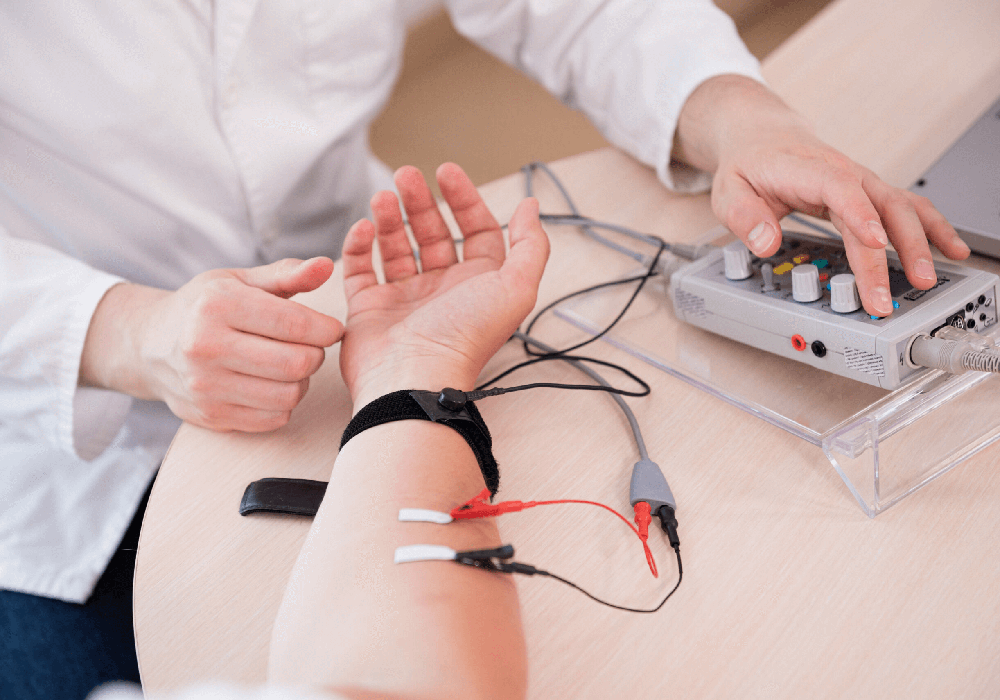
A tilt table test helps assess how your heart rate and blood pressure respond when your body moves from a lying position toward upright posture.
You lie on a specially designed table while medical staff monitor your cardiovascular responses.
The test may be recommended for selected patients with unexplained fainting, orthostatic intolerance, or suspected autonomic disorders.
Other investigations may include:
Quantitative Sudomotor Axon Reflex Test (QSART)
QSART evaluates the function of autonomic nerves involved in sweating.
Thermoregulatory sweat testing
This assesses sweating patterns across different areas of the body.
Heart rate and blood pressure reflex testing
Tests involving deep breathing or the Valsalva maneuver may provide information about cardiovascular autonomic function.
Blood tests and other investigations
Depending on the findings, doctors may investigate diabetes, anemia, thyroid function, vitamin deficiencies, or other possible causes.
According to MedlinePlus guidance on autonomic testing, tilt testing and QSART can help assess different aspects of autonomic nervous system function.
Not every patient requires these specialized investigations.
The goal is to select tests that answer a specific clinical question rather than ordering every available test.
How Are Autonomic Disorders Treated?
Treatment depends on the cause and the particular symptoms involved.
There is no single treatment plan that works for every autonomic disorder.
For example, dizziness caused by dehydration requires a different approach from dizziness caused by diabetic autonomic neuropathy or POTS.
Treating the underlying cause
If diabetes, medication effects, or another medical condition contributes to symptoms, treating that problem may improve autonomic function or reduce symptoms.
A doctor may review medications, assess associated health conditions, and recommend targeted treatment.
Never stop prescribed blood pressure or heart medicines without medical advice.
Managing dizziness and blood pressure symptoms
Depending on the diagnosis, doctors may recommend measures such as:
- Rising slowly from a sitting or lying position
- Avoiding prolonged standing when it triggers symptoms
- Sitting or lying down when feeling faint
- Using suitable compression garments
- Adjusting fluid intake when medically appropriate
- Considering carefully supervised exercise or rehabilitation
- Prescribing medication for selected patients
Some patients benefit from increased fluid or salt intake.
However, this is not appropriate for everyone, particularly people with high blood pressure, heart failure, kidney disease, or certain other conditions.
Follow individualized medical advice rather than increasing salt or fluids on your own.
Managing sweating changes
Treatment of sweating problems depends on whether sweating is excessive, reduced, or uneven.
Excessive sweating may need investigation for medication-related, hormonal, neurological, or other causes.
Reduced sweating requires attention to heat exposure and overheating risk.
In selected cases, specialized treatment may be appropriate.
The Mayo Clinic guide to autonomic neuropathy treatment describes approaches involving medication, compression garments, and carefully selected lifestyle changes.
Treatment should be tailored to the patient rather than based on symptoms alone.
When Should You See a Neurologist?
A neurological evaluation is worth considering when dizziness, sweating changes, or blood pressure fluctuations are recurrent, unexplained, or accompanied by other neurological symptoms.
You should consider assessment if:
- You frequently feel dizzy when standing
- You have episodes of unexplained fainting
- Your blood pressure drops substantially with posture changes
- Sweating has become unusually heavy or noticeably reduced
- You experience several autonomic symptoms together
- You have diabetes with possible nerve-related symptoms
- Symptoms persist despite initial medical assessment
- Numbness, tingling, balance problems, or weakness are developing
A neurologist can assess whether autonomic nerve dysfunction may be contributing and determine whether further testing or another specialist’s evaluation is appropriate.
Not every person with orthostatic dizziness needs a neurologist first. A primary care doctor or cardiologist may be the appropriate initial clinician, particularly if a heart-related cause is suspected.
If muscle weakness is progressively worsening, that pattern needs a separate neurological assessment.
For example, patients experiencing ongoing loss of strength, muscle wasting, or worsening walking difficulty may benefit from learning about motor neuron disease warning signs and evaluation.
Progressive motor weakness is not the same as the temporary faint feeling associated with low blood pressure.
Before your appointment, it may help to record when symptoms occur, whether they improve after sitting, your medication schedule, and any BP or pulse readings taken safely.
This information can make the clinical discussion more productive.