
Muscle weakness, tingling, numbness, or repeated muscle twitching can leave you wondering what is happening inside your body. Sometimes the problem comes from a nerve. Sometimes it begins in the muscle itself. In other cases, the nerve and muscle are not communicating properly.
This is where specialized neurological tests can help.
RNS, EMG and nerve conduction studies are recommended when a neurologist needs more information about how your nerves and muscles are working. Although these tests are often discussed together, they investigate different parts of the body’s nerve-muscle system.
Understanding when each test is useful can help you approach your neurological evaluation with less uncertainty and a clearer idea of what to expect.
Medically guided by Dr. Siddharth Kharkar
Trusted neurological guidance that turns complex symptoms into clear next steps. Focused on helping patients and families understand when nerve and muscle tests may be needed, what they can reveal, and why timely neurological evaluation matters.
Quick Answer: When Are These Tests Recommended?
Neurologists may recommend repetitive nerve stimulation (RNS), electromyography (EMG), or nerve conduction studies (NCS) when symptoms suggest a problem involving peripheral nerves, muscles, or the connection between them.
Nerve conduction studies are commonly used for numbness, tingling, and suspected nerve damage. Needle EMG helps investigate unexplained muscle weakness and certain nerve or muscle disorders. RNS is particularly useful when a condition such as myasthenia gravis is suspected.
The choice depends on your symptoms, examination findings, and the diagnosis your neurologist is considering. Not everyone needs all three tests.
RNS, EMG and Nerve Conduction Studies at a Glance
These tests measure different parts of the nerve-muscle system.
Test | What it checks | When it may be recommended |
RNS — Repetitive Nerve Stimulation | How reliably repeated nerve signals activate a muscle | Fluctuating weakness, suspected myasthenia gravis, or other neuromuscular junction disorders |
EMG — Electromyography | Electrical activity within muscles | Unexplained weakness, muscle wasting, suspected muscle disease, or certain motor nerve disorders |
NCS — Nerve Conduction Study | How quickly and effectively electrical signals travel through peripheral nerves | Numbness, tingling, suspected nerve compression, or peripheral neuropathy |
EMG and nerve conduction studies are frequently performed together because they provide complementary information. RNS may be added when the symptoms suggest a problem with nerve-to-muscle communication.
The important point: These tests are not interchangeable. Each answers a different clinical question.
What Does Each Nerve and Muscle Test Measure?
Your muscles depend on electrical messages traveling through nerves. When those messages are interrupted, weakened, or unable to activate the muscles properly, symptoms can develop.
The type of test recommended depends on where the problem may be occurring.
What Is Repetitive Nerve Stimulation (RNS)?
Repetitive nerve stimulation is a specialized electrical test that evaluates communication between a nerve and a muscle.
This communication happens at the neuromuscular junction, the point where a nerve passes its message to a muscle.
During RNS, a nerve receives a series of brief electrical pulses. Recording electrodes measure how the muscle responds to each pulse.
Normally, the muscle’s response remains reasonably consistent during low-frequency stimulation. In certain neuromuscular junction disorders, the response becomes progressively smaller.
This pattern may suggest that nerve-to-muscle communication is impaired.
RNS is particularly useful when myasthenia gravis is suspected. However, an abnormal result must be interpreted alongside symptoms, examination findings, and other investigations.
What Is Electromyography (EMG)?
Electromyography measures the electrical activity produced by muscles.
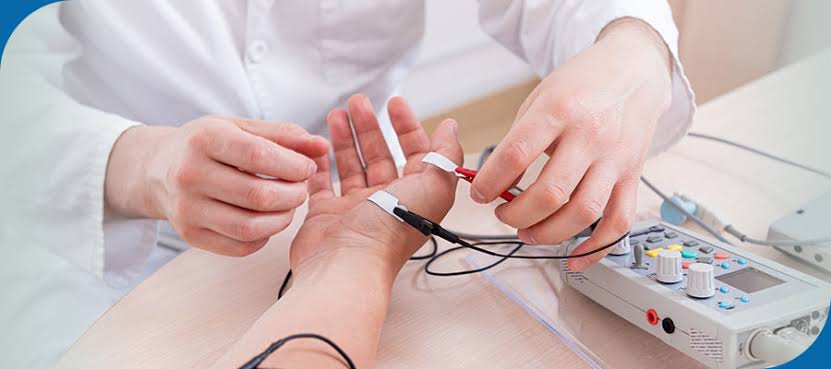
During a conventional needle EMG, a neurologist or appropriately trained specialist inserts a thin recording electrode into selected muscles. Electrical activity is recorded while the muscle is relaxed and during gentle contraction.
The results help identify whether weakness may be related to muscle disease or problems affecting the nerves that control muscles.
For example, EMG may help investigate:
- Weakness in an arm or leg
- Muscle wasting
- Persistent muscle twitching
- Suspected nerve root injury
- Certain muscle diseases
Needle EMG is different from single-fiber EMG, a specialized technique sometimes used to investigate neuromuscular junction disorders.
What Is a Nerve Conduction Study (NCS)?
A nerve conduction study measures how electrical signals travel through peripheral nerves.
Peripheral nerves connect the brain and spinal cord with the muscles, skin, and other parts of the body.
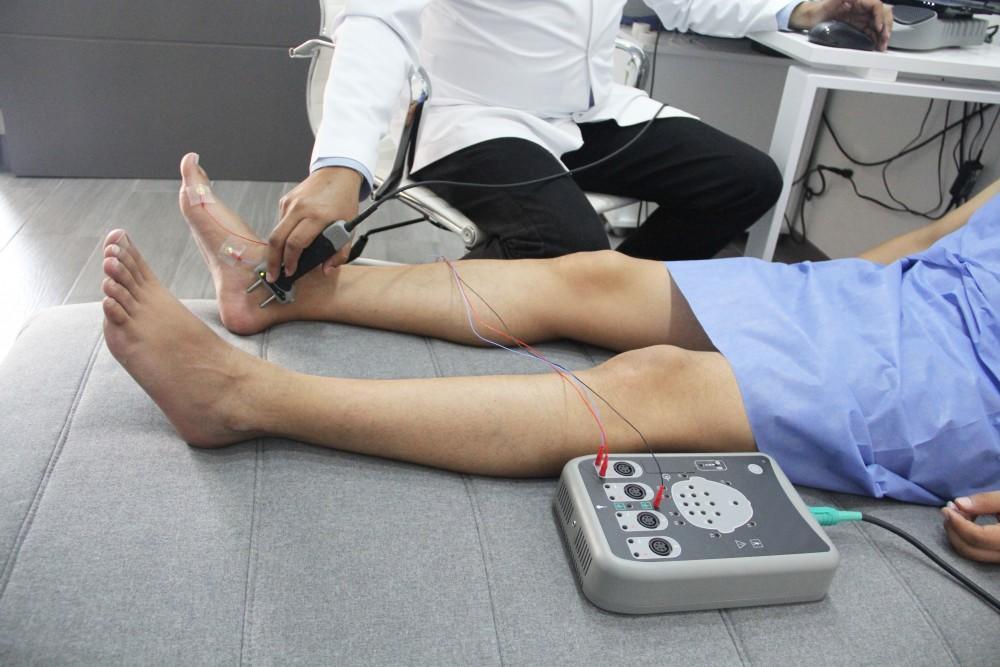
During the test, small electrodes are placed on the skin. Brief electrical pulses stimulate selected nerves, and the responses are recorded.
The test helps determine whether nerve signals are slower or weaker than expected.
For example, NCS can help investigate nerve compression at the wrist, nerve injury, and peripheral neuropathy.
Unlike needle EMG, a routine nerve conduction study generally does not require a needle electrode.
Which Symptoms May Lead a Neurologist to Recommend Testing?
Not every episode of tingling or muscle discomfort requires electrodiagnostic testing.
However, symptoms that persist, progress, return repeatedly, or interfere with daily activities may need closer evaluation.
Persistent or Unexplained Muscle Weakness
True muscle weakness means that a muscle cannot produce its usual strength.
You may notice difficulty:
- Getting up from a chair
- Climbing stairs
- Lifting your arms above your head
- Holding objects securely
- Walking without dragging a foot
- Performing tasks that were previously easy
Weakness may arise from the nerves, muscles, neuromuscular junction, brain, or spinal cord.
A neurologist uses your medical history and examination to narrow down the possibilities.
EMG and nerve conduction studies may then help identify whether the problem involves peripheral nerves or muscles.
If you are unsure what your symptoms mean, understanding whether muscle weakness comes from nerves, muscles, or the neuromuscular junction can help explain why the pattern of weakness matters.
Numbness, Tingling or Nerve Pain
Numbness and tingling are common reasons for nerve conduction studies.
Some people describe these symptoms as pins and needles, burning, electric shocks, or reduced sensation.
They may occur in the hands, feet, arms, or legs.
For example, tingling and numbness affecting certain fingers may suggest carpal tunnel syndrome. Similar symptoms involving both feet may raise concern about peripheral neuropathy.
Nerve conduction studies can help determine whether larger peripheral nerve fibers are affected and whether the findings fit a particular pattern of nerve damage.
Weakness That Worsens With Repeated Activity
Some muscle problems have an unusual pattern.
A person may feel relatively strong after resting but become weaker when using the same muscles repeatedly.
Examples include:
- Eyelids that droop later in the day
- Double vision that comes and goes
- Speech becoming unclear after prolonged talking
- Difficulty chewing toward the end of a meal
- Arm weakness that becomes more noticeable with repeated activity
This pattern may suggest a disorder affecting communication between nerves and muscles.
When myasthenia gravis is suspected, RNS or another specialized neuromuscular test may help the neurologist investigate further.
When Is RNS, EMG or NCS Specifically Recommended?
Although these tests can be combined, each has specific clinical uses.
When Is RNS Recommended?
Repetitive nerve stimulation is most often considered when a neurologist suspects a neuromuscular junction disorder.
Myasthenia gravis is one of the main conditions investigated using this test.
RNS may be particularly helpful when:
- Muscle weakness becomes worse with repeated activity.
- Eyelid drooping or double vision suggests myasthenia gravis.
- Speech, chewing, or neck strength changes with activity.
- Antibody tests are negative or inconclusive, but clinical suspicion remains.
- A neurologist needs additional evidence of impaired neuromuscular transmission.
RNS can also contribute to evaluating selected other neuromuscular junction disorders, including Lambert-Eaton myasthenic syndrome, using an appropriate testing protocol.
Importantly, RNS is not necessary for every person with myasthenia gravis. In some patients, typical symptoms and supportive antibody results may provide enough evidence for diagnosis.
If routine RNS is inconclusive, a neurologist may consider single-fiber EMG.
When Is Needle EMG Recommended?
Needle EMG is recommended when a doctor needs to understand whether a muscle or its supplying motor nerve is functioning abnormally.
It may be useful for investigating:
- Persistent or progressive muscle weakness
- Muscle wasting
- Weakness associated with suspected nerve root damage
- Certain muscle disorders
- Unexplained muscle twitching accompanied by other concerning findings
- Conditions affecting motor neurons
EMG findings can help identify patterns suggesting nerve injury or muscle disease.
However, muscle twitching by itself does not automatically mean that a serious neurological condition is present.
The complete symptom pattern and neurological examination are important.
When Are Nerve Conduction Studies Recommended?
Nerve conduction studies are commonly recommended when symptoms suggest damage, compression, or disease involving peripheral nerves.
Examples include:
- Numbness in the fingers or feet
- Persistent tingling
- Burning or shooting nerve pain
- Suspected carpal tunnel syndrome
- Peripheral neuropathy
- Certain traumatic nerve injuries
- Weakness accompanied by sensory changes
NCS may help identify which nerves are affected, the nature of the abnormality, and the extent of measurable nerve dysfunction.
The test is particularly helpful for evaluating larger sensory and motor nerve fibers.
Why Are EMG and NCS Often Performed Together?
EMG and nerve conduction studies provide different but related information.
NCS evaluates signals traveling through peripheral nerves. Needle EMG records electrical activity within muscles.
When used together, they can help distinguish certain nerve disorders from muscle disorders and identify patterns such as nerve root injury.
For example, a patient with hand weakness may undergo nerve conduction testing to look for nerve compression. Needle EMG may be added if the neurologist suspects a problem affecting motor nerves or nerve roots.
Combining these tests can provide a more complete picture, but the testing plan should always match the clinical question.
Which Conditions Can These Tests Help Investigate?
Electrodiagnostic testing can help evaluate several neurological and neuromuscular disorders. The results provide evidence that must be considered alongside the patient’s symptoms and examination.
Myasthenia Gravis and Neuromuscular Junction Disorders
Myasthenia gravis affects communication between nerves and muscles.
The characteristic symptom is muscle weakness that often worsens with activity and improves after rest.
Some patients first notice drooping eyelids, double vision, or difficulty with prolonged chewing. Others develop weakness involving the neck, limbs, speaking, or swallowing.
Blood tests for specific antibodies are an important part of diagnosis. RNS and single-fiber EMG may be useful when additional evidence is needed.
Recognizing myasthenia gravis early symptoms can help patients seek evaluation before weakness significantly affects daily activities.
Breathing problems or rapidly worsening swallowing difficulty require emergency medical care rather than routine testing appointments.
Peripheral Neuropathy, Carpal Tunnel Syndrome and Pinched Nerves
Peripheral neuropathy happens when nerves outside the brain and spinal cord are damaged or affected by disease.
Possible symptoms include numbness, tingling, burning pain, sensory loss, and sometimes weakness.
Nerve conduction studies can help assess many larger-fiber neuropathies and nerve compression disorders.
Carpal tunnel syndrome is a common example. The median nerve becomes compressed at the wrist, potentially causing finger numbness, tingling, or hand weakness.
A pinched nerve in the neck or lower back may produce pain, weakness, or sensory symptoms spreading into an arm or leg. This is often called radiculopathy.
Needle EMG can sometimes help identify nerve root involvement, while NCS provides complementary information and may help exclude other peripheral nerve disorders.
The tests do not always explain every cause of pain or tingling. Additional clinical evaluation may be necessary.
Muscle Diseases and Motor Neuron Disorders
Some disorders affect the muscle itself. Others affect the motor nerve cells responsible for controlling muscle movement.
In certain muscle diseases, patients may struggle to rise from a chair, climb stairs, or lift their arms.
Needle EMG can sometimes identify patterns that suggest muscle disease, although blood tests, imaging, genetic testing, or other investigations may also be needed.
EMG is also an important part of evaluating suspected motor neuron disorders, including amyotrophic lateral sclerosis (ALS).
However, EMG alone cannot confirm ALS, and muscle twitching does not necessarily indicate motor neuron disease.
Patients experiencing progressive weakness or muscle wasting may benefit from understanding motor neuron disease warning signs and evaluation.
The aim of testing is to understand the pattern of nerve and muscle involvement, consider possible causes, and decide what further evaluation is necessary.
Are These Tests Used for Stroke, TIA or Seizures?
RNS, EMG, and routine nerve conduction studies are not the usual first tests used to diagnose stroke, transient ischemic attack (TIA), or seizures.
Stroke and TIA affect blood flow to the brain. Their evaluation may involve urgent neurological assessment, CT or MRI scans, and tests of blood vessels and heart function.
Seizures involve abnormal electrical activity in the brain. An electroencephalogram (EEG), sometimes combined with video monitoring, may help investigate suspected epilepsy.
This distinction matters because EMG measures muscle activity, while EEG measures brain activity.
If someone suddenly develops facial drooping, weakness on one side, difficulty speaking, sudden loss of vision, or a major balance problem, seek emergency medical care immediately. Do not wait for an outpatient EMG appointment, even if the symptoms improve.
Similarly, rapidly worsening weakness, breathing difficulty, or significant swallowing difficulty requires urgent assessment.
RNS, EMG, and NCS may be appropriate later if a neurologist suspects a separate peripheral nerve or muscle problem, but they do not replace emergency evaluation.
What Happens During RNS, EMG and Nerve Conduction Testing?
Knowing what happens during these investigations can make the experience less worrying.
Most electrodiagnostic tests are performed while the patient is awake.
The specialist first reviews the clinical problem and identifies which nerves or muscles need to be examined.
During nerve conduction studies, small electrodes are attached to the skin. Brief electrical pulses stimulate selected nerves, and the resulting signals are recorded.
During needle EMG, a thin sterile electrode is inserted into selected muscles. The specialist records activity while the muscle is relaxed and gently contracted.
During RNS, a series of electrical pulses is delivered to a nerve while electrodes record how the muscle responds. The sequence may be repeated after movement or rest, depending on the clinical question.
The exact muscles and nerves tested vary from patient to patient.
Does Testing Hurt, and How Long Does It Take?
Discomfort depends on the test and the individual.
Nerve conduction studies produce brief electrical sensations that may feel like tapping, tingling, or a small shock.
Needle EMG may cause a short pinching sensation when the electrode enters a muscle. Some muscles may feel mildly sore afterward.
RNS involves repeated electrical pulses and can feel more uncomfortable than a single nerve stimulation.
Most patients can complete testing without sedation, although they should tell the specialist if discomfort becomes difficult to tolerate.
The duration depends on the number of nerves and muscles examined. Many combined EMG and nerve conduction appointments take approximately 30–90 minutes, while specialized or more extensive testing may take longer.
The testing team can provide a more accurate estimate based on the planned examination.
How Should You Prepare for Testing?
Most patients do not need major preparation before routine EMG or nerve conduction testing.
A few simple steps can help:
- Wear loose, comfortable clothing so the arms and legs are easy to examine.
- Keep the skin clean and avoid applying lotions or oils on the day of testing.
- Bring previous neurological reports if available.
- Carry a list of current medications.
- Tell the testing team about implanted medical devices.
- Explain any bleeding disorder or increased infection risk.
You can usually eat and drink normally before routine testing unless your medical team gives different instructions.
Afterward, most people can return to normal daily activities. Mild soreness or small bruises may occur following needle EMG.
Medicines, Blood Thinners and Implanted Devices
Before the test, tell your clinician if you take blood-thinning medication or have a pacemaker, implanted defibrillator, or another electrical medical device.
These do not always prevent testing, but the specialist may need to adjust the procedure or take additional precautions.
Certain medications can also influence specialized neuromuscular testing.
For example, if you take pyridostigmine for myasthenia gravis, ask the testing team whether any preparation is needed.
Do not stop prescribed medication on your own. Medication changes should only be made under the direction of your treating clinician.
What Do Normal or Abnormal Test Results Mean?
Electrodiagnostic results are interpreted according to the nerves and muscles examined, the specific measurements recorded, and the symptoms being investigated.
An abnormal nerve conduction study may suggest peripheral nerve damage or compression.
An abnormal needle EMG may reveal electrical patterns associated with certain nerve or muscle disorders.
An abnormal RNS result may support a problem with neuromuscular transmission, particularly when the clinical findings are consistent with a condition such as myasthenia gravis.
However, an abnormal result does not automatically establish one specific diagnosis.
A neurologist considers the findings together with your medical history, examination, and other investigations.
Can a Normal Test Miss a Problem?
Yes. A normal result does not exclude every neurological or neuromuscular condition.
For example, conventional nerve conduction studies mainly evaluate larger nerve fibers. A person with isolated small-fiber neuropathy may have normal routine nerve conduction results despite experiencing burning pain or abnormal sensations.
Likewise, RNS may be normal in some people with myasthenia gravis, particularly when symptoms are mild or limited to certain muscles.
Test selection, the stage of the condition, and which muscles or nerves are examined can influence what abnormalities are detected.
When suspicion remains high, the neurologist may recommend further evaluation, more specialized testing, or follow-up.
The goal is not simply to obtain a normal or abnormal report. It is to understand what the results mean for your individual symptoms.
When Should You See a Neurologist?
A neurological consultation may be appropriate if you experience persistent or progressive symptoms such as:
- Unexplained muscle weakness
- Repeated numbness or tingling
- Muscle wasting or loss of strength
- Persistent weakness affecting walking or daily tasks
- Drooping eyelids or double vision that comes and goes
- Weakness that becomes worse with repeated muscle use
- Symptoms that remain unexplained despite previous investigations
You do not need to decide for yourself whether RNS, EMG, or NCS is the correct test.
A neurologist can first assess your symptoms, reflexes, strength, sensation, and medical history. This helps determine whether electrodiagnostic testing is likely to answer a useful question.
If testing is recommended, the findings should guide the next stage of diagnosis and treatment planning.
The earlier a persistent or progressive problem is assessed, the sooner appropriate next steps can be considered.