

A fever is common during an infection. But when fever appears with sudden confusion, a seizure, unusual behavior, severe headache, weakness, or difficulty waking, the situation may involve the brain or nervous system.
These neurological emergency symptoms should not be watched casually at home. The person needs urgent medical assessment, especially when the symptoms are new, severe, or getting worse quickly.
Emergency warning: If someone is having an active seizure, is difficult to wake, has trouble breathing, develops sudden weakness or speech difficulty, or loses consciousness, contact local emergency services and go to the nearest emergency department.
Medically Guided by Dr. Siddharth Kharkar
Trusted neurological guidance that turns complex symptoms into clear next steps.
This article is focused on helping patients and families recognize serious neurological warning signs early so they can seek the right care without delay.
Dr. Siddharth Kharkar is an American Board-certified neurologist with advanced training in epilepsy and complex neurological disorders. His approach is patient-first: understand the symptom pattern carefully, identify the possible cause, and explain the next step clearly.
This article provides general education. It cannot diagnose the cause of active symptoms or replace emergency medical care.
Quick Answer: When Do These Symptoms Need Emergency Care?
Fever with new confusion, a first-time seizure, repeated seizures, severe headache, stiff neck, unusual drowsiness, loss of consciousness, one-sided weakness, or trouble speaking may signal a neurological emergency.
Do not wait for every possible symptom to appear. Conditions affecting the brain can progress quickly, and the cause cannot be identified safely at home.
At a Glance: Neurological Emergency Warning Signs
Warning sign | Why it matters | What to do |
New confusion or disorientation | May mean the brain is not functioning normally | Seek emergency assessment |
First-time seizure | May be caused by infection, stroke, bleeding, or another acute problem | Go to emergency care |
Seizure lasting five minutes or longer | May become a prolonged seizure emergency | Call emergency services |
Repeated seizures without full recovery | The brain is not returning to its usual state | Call emergency services |
Difficulty waking or reduced responsiveness | May indicate serious brain involvement | Seek emergency care immediately |
Severe or rapidly worsening headache | Can occur with infection, bleeding, or raised pressure | Seek urgent assessment |
Fever with stiff neck | Can occur when tissues around the brain are inflamed | Go to emergency care |
Facial drooping, arm weakness, or speech difficulty | May be a stroke or TIA | Act immediately |
Trouble breathing or blue lips | Breathing may be dangerously affected | Call emergency services |
A rash with fever and severe illness | May occur with serious infection or sepsis | Do not wait for it to improve |
Why Fever with Confusion or Seizures Can Be Dangerous
A routine fever may cause tiredness, weakness, body pain, or poor appetite. It should not normally cause marked disorientation, a new seizure, one-sided weakness, loss of consciousness, or an inability to wake properly.
Confusion means more than feeling tired or distracted. A person may:
- Not know where they are.
- Give unrelated answers.
- Fail to recognize familiar people.
- Speak strangely.
- Behave in a way that is very unusual for them.
- Become agitated, withdrawn, or difficult to wake.
A seizure may involve full-body shaking, but not every seizure looks dramatic. Some cause staring, loss of awareness, repeated movements, facial twitching, or sudden inability to respond.
The pattern matters. Fever followed by changes in awareness, behavior, movement, speech, or consciousness suggests that the illness may be affecting more than the rest of the body.
When to Seek Emergency Medical Care Immediately
A First-Time or Prolonged Seizure
A first seizure needs urgent medical assessment, even if the person seems better afterward.
Contact emergency services when:
- The seizure lasts five minutes or longer.
- Another seizure begins before the person fully recovers.
- It is the person’s first known seizure.
- Breathing becomes difficult.
- The person remains unresponsive.
- The seizure causes an injury.
- The seizure occurs in water.
- The person is pregnant, seriously ill, or has diabetes.
- The seizure is different from the person’s usual pattern.
Most seizures end within a few minutes. A seizure continuing for five minutes or repeated seizures without recovery must be treated as an emergency.
In adults, do not assume that a seizure during fever is a harmless “febrile seizure.” Simple febrile seizures are mainly a childhood condition. An adult with fever and a new seizure needs urgent investigation.
Sudden Confusion or Difficulty Waking
 Sudden confusion may be caused by infection, stroke, a seizure, low blood sugar, medication effects, or another serious medical problem.
Seek emergency help if the person:
- Cannot answer simple questions properly.
- Does not know their name, location, or the date.
- Is extremely drowsy.
- Cannot stay awake.
- Becomes suddenly agitated or behaves unusually.
- Sees or hears things that are not present.
- Has confusion that is rapidly worsening.
Sudden confusion should not be dismissed as tiredness, aging, anxiety, or “just the fever.”
Severe Headache, Stiff Neck, or Repeated Vomiting
A severe headache becomes more concerning when it appears with:
- Neck stiffness.
- Sensitivity to light.
- Repeated vomiting.
- Extreme drowsiness.
- A new rash.
- Weakness or trouble speaking.
Not every person will have all these symptoms. They may also appear in a different order. Waiting for a “complete” symptom pattern can delay treatment.
Weakness, Facial Drooping, or Speech Difficulty
Sudden weakness or numbness on one side, facial drooping, slurred speech, vision loss, or loss of balance may indicate a stroke.
These signs require immediate stroke assessment even when the person also has fever or another illness.
Symptoms that disappear after a few minutes may still represent a transient ischemic attack, or TIA. A TIA is not something to watch at home because it can be a warning before a larger stroke.
Breathing Difficulty, Blue Lips, or Loss of Consciousness
Call emergency services if the person:
- Has difficulty breathing.
- Appears to be choking.
- Develops blue or gray lips.
- Does not begin waking after the seizure.
- Loses consciousness.
- Stops breathing normally.
Do not try to give food, water, tablets, or other oral medicine to someone who is not fully awake.
What to Do When Someone Is Having a Seizure
Watching a seizure can be frightening. Your first job is to protect the person from injury and observe what happens.
What You Should Do
- Start timing the seizure.
Note when it begins and how long it lasts. - Keep the person safe.
Move hard, hot, or sharp objects away. - Protect the head.
Place something soft and flat beneath it when possible. - Turn the person onto their side.
Do this when it is safe, particularly if they are not fully awake. - Loosen tight clothing around the neck.
- Stay with the person.
Speak calmly as they begin to recover. - Observe useful details.
Note whether the shaking affected one side or both sides, whether the eyes turned in one direction, and how the person behaved before and after the event.
What You Should Never Do
- Do not restrain the person’s movements.
- Do not force the mouth open.
- Do not place a spoon, finger, cloth, or any other object in the mouth.
- Do not give water, food, or tablets until the person is fully alert.
- Do not try to stop the seizure by shaking or shouting.
- Do not leave the person alone immediately afterward.
Turning the person onto their side, keeping the area safe, and avoiding restraint or objects in the mouth are central seizure first-aid steps.
Could It Be a Stroke or TIA? Use B.E. F.A.S.T.
Use B.E. F.A.S.T. to recognize common stroke warning signs:
- B — Balance: Sudden dizziness, unsteadiness, or loss of coordination.
- E — Eyes: Sudden blurred vision, double vision, or vision loss.
- F — Face: One side of the face droops or feels numb.
- A — Arm: One arm becomes weak, numb, or drifts downward.
- S — Speech: Speech is slurred, strange, or difficult to understand.
- T — Time: Contact emergency services immediately.
Also look for sudden severe headache, confusion, vomiting, collapse, or a new seizure.
Fever is not a typical feature of a simple TIA. However, fever does not rule out stroke, and it may point to a simultaneous infection or another serious illness. Do not try to decide the cause at home.
What Can Cause Fever, Confusion, or Seizures?
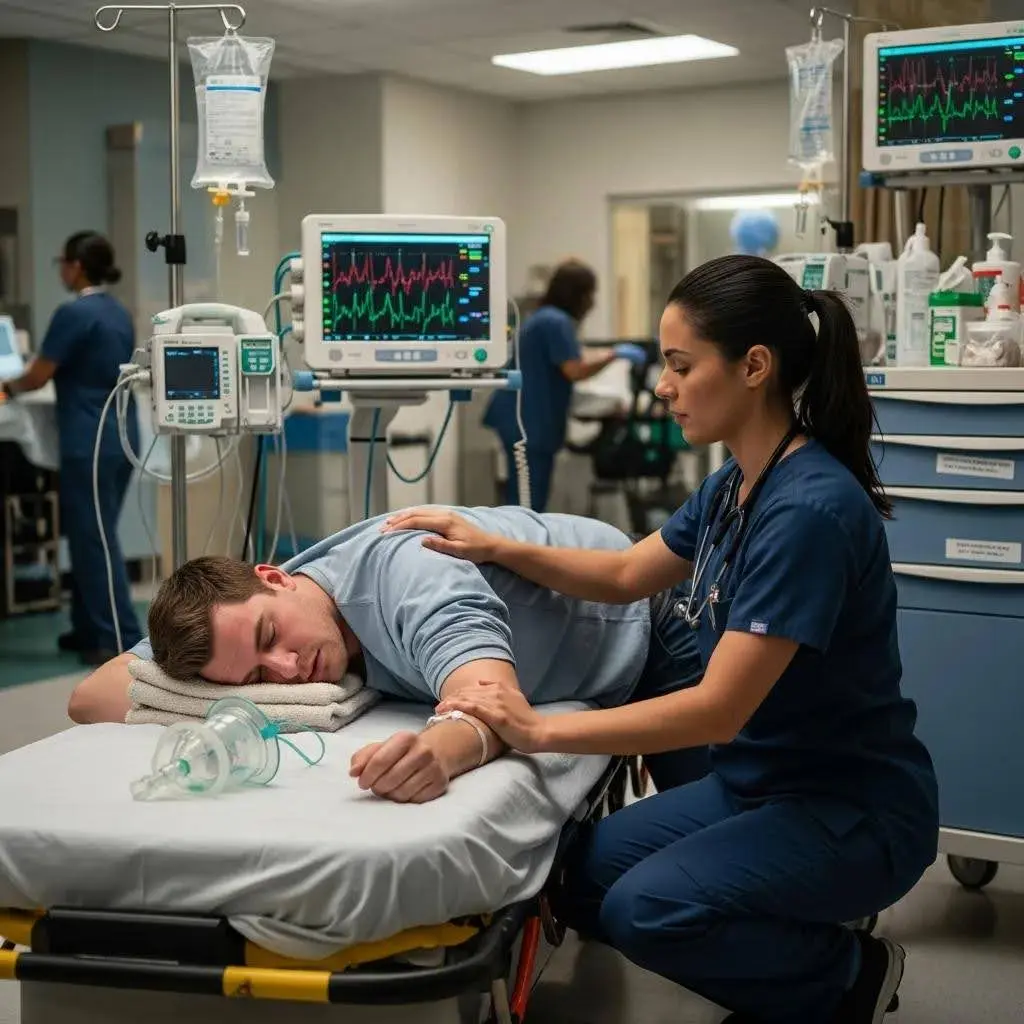
Several conditions can produce this symptom combination. Symptoms alone cannot confirm which one is present.
Meningitis
Meningitis is inflammation of the protective tissues surrounding the brain and spinal cord.
Possible warning signs include:
- Severe headache.
- Neck stiffness.
- Sensitivity to light.
- Difficulty waking.
- Rash or blotchy skin in some cases.
A rash is not always present. Do not wait for one to appear before seeking care.
Encephalitis
Encephalitis is inflammation affecting the brain itself. It may be caused by an infection or by an abnormal immune response.
It can begin with fever, headache, weakness, or flu-like symptoms and then progress to:
- Personality or behavior changes.
- Speech problems.
- Loss of consciousness.
Serious symptoms can develop over hours or days and require hospital treatment.
Other Brain or Nervous System Infections
A brain infection may involve the brain, its protective coverings, or a localized collection of infection such as an abscess.
Doctors may consider this possibility when fever appears with severe headache, seizures, confusion, weakness, speech changes, or reduced consciousness.
Stroke or Bleeding in the Brain
A stroke or brain hemorrhage can cause:
- Sudden weakness.
- Facial drooping.
- Speech difficulty.
- Vision changes.
- Severe headache.
- Loss of balance.
- A new seizure.
These symptoms may occur without fever. When fever is also present, doctors must consider whether infection, inflammation, or another illness is occurring alongside the neurological event.
Sepsis, Heatstroke, or Metabolic Problems
Not every neurological emergency begins inside the brain.
A severe infection elsewhere in the body can lead to sepsis, which may cause fever, confusion, rapid breathing, a fast heart rate, and extreme illness.
Heatstroke may cause a very high body temperature, confusion, restlessness, poor coordination, seizures, or loss of consciousness. It is a medical emergency.
Very low blood sugar or abnormal sodium levels can also produce confusion, seizures, or coma. This is particularly important in people with diabetes, kidney disease, severe vomiting, or certain medication use.
Medicines, Toxins, or Withdrawal
Confusion or seizures may also be triggered by:
- Medicine side effects or overdose.
- Recreational drugs or toxins.
- Abrupt alcohol withdrawal.
- Missed anti-seizure medication.
- Interactions between medicines.
- Severe dehydration.
These possibilities still require medical assessment. Do not assume the cause is known simply because the person has used a particular medicine or substance.
How Doctors Evaluate a Possible Neurological Emergency
The first goal is not to give the condition a label immediately. The first goal is to stabilize the patient, identify dangerous possibilities, and begin time-sensitive treatment.
The Initial Examination
The medical team may check:
- Breathing and oxygen levels.
- Heart rate and blood pressure.
- Blood glucose.
- Alertness and orientation.
- Pupil reactions.
- Strength and sensation.
- Neck stiffness.
- Balance and coordination.
- Skin changes or rash.
- Recent infections, travel, insect bites, medicines, or substance use.
Family members can help by explaining exactly when the person was last behaving normally and how the symptoms developed.
Blood Tests
Blood testing may look for:
- Infection or inflammation.
- Blood glucose problems.
- Sodium or other electrolyte changes.
- Kidney and liver function.
- Blood-count abnormalities.
- Toxic substances or medication effects.
- Organ problems caused by severe infection.
MRI or CT Brain Imaging
A CT scan may be used quickly to look for bleeding, swelling, a large stroke, or another structural problem.
MRI can provide more detailed information about inflammation, smaller strokes, or changes in particular areas of the brain.
The correct scan depends on the symptoms, urgency, and the patient’s condition.
EEG
An EEG records electrical activity in the brain.
Doctors may use it when:
- A seizure is suspected.
- The person remains confused after visible shaking has stopped.
- Subtle or non-convulsive seizures are possible.
- The cause of altered awareness is unclear.
Lumbar Puncture
A lumbar puncture collects a small amount of fluid surrounding the brain and spinal cord.
When appropriate, it can help doctors look for infection, inflammation, or immune-related disease. Imaging may be performed first in selected patients, depending on their examination and level of consciousness.
Blood tests, brain imaging, EEG, and lumbar puncture are among the investigations commonly used when infection or inflammation of the nervous system is suspected.
How Treatment Is Decided
Treatment depends on the most likely cause, the person’s condition, and the results of the initial examination.
Possible treatment may include:
- Intravenous antibiotics for suspected bacterial infection.
- Antiviral medicine for certain viral infections.
- Anti-seizure medicine.
- Medicine to reduce harmful inflammation.
- Correction of low blood sugar or electrolyte problems.
- Treatment for sepsis.
- Cooling and organ support for heatstroke.
- Emergency stroke treatment when appropriate.
- Breathing support, fluids, and close monitoring.
Doctors may begin treatment for the most dangerous likely causes before every final test result is available. Waiting for complete certainty can be unsafe in rapidly progressing conditions.
What Not to Do When Serious Symptoms Appear
- Do not wait for a rash.
- Do not assume confusion is caused only by fever.
- Do not assume an adult’s seizure is a simple febrile seizure.
- Do not wait for facial weakness or speech difficulty to become more obvious.
- Do not give food, water, or tablets to a person who is not fully alert.
- Do not place anything inside the mouth during a seizure.
- Do not restrain the person.
- Do not drive an unconscious, actively seizing, or severely confused person yourself when emergency transport is available.
- Do not delay hospital care while trying to arrange a routine clinic appointment.
- Do not allow temporary improvement to create false reassurance after stroke-like symptoms.
A person can appear only mildly unwell at first and then worsen. The speed and combination of symptoms matter.
When Neurological Follow-Up Is Needed
Emergency treatment comes first. Neurological follow-up may be helpful after the person has been stabilized, particularly when there is:
- A first seizure.
- Repeated seizures.
- Continuing confusion.
- Memory or personality changes.
- Persistent headache.
- Weakness or numbness.
- Speech difficulty.
- Balance problems.
- Uncertainty about whether the event was a seizure, stroke, TIA, fainting episode, or another condition.
- Questions about anti-seizure medicine.
- Concerns about returning to work, study, driving, or normal activity.
Follow-up is also important after serious infection or stroke when the patient continues to experience problems with thinking, speech, movement, or behavior.